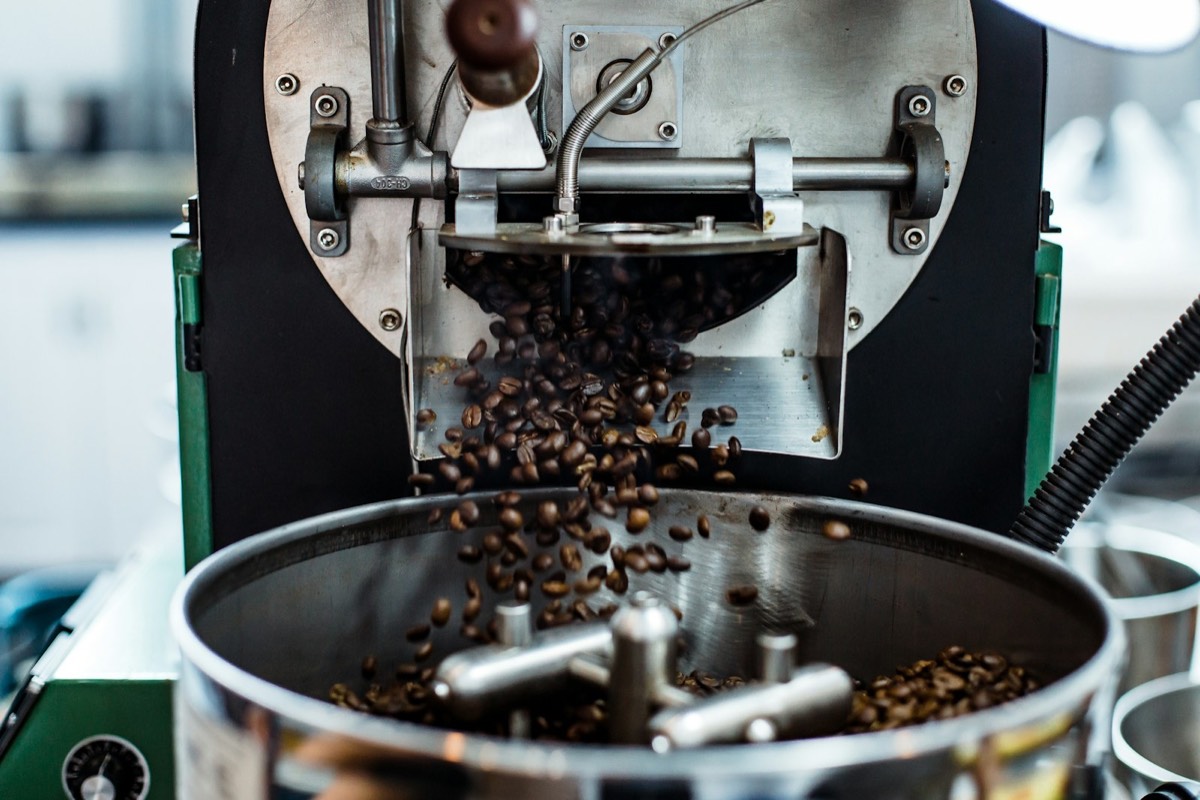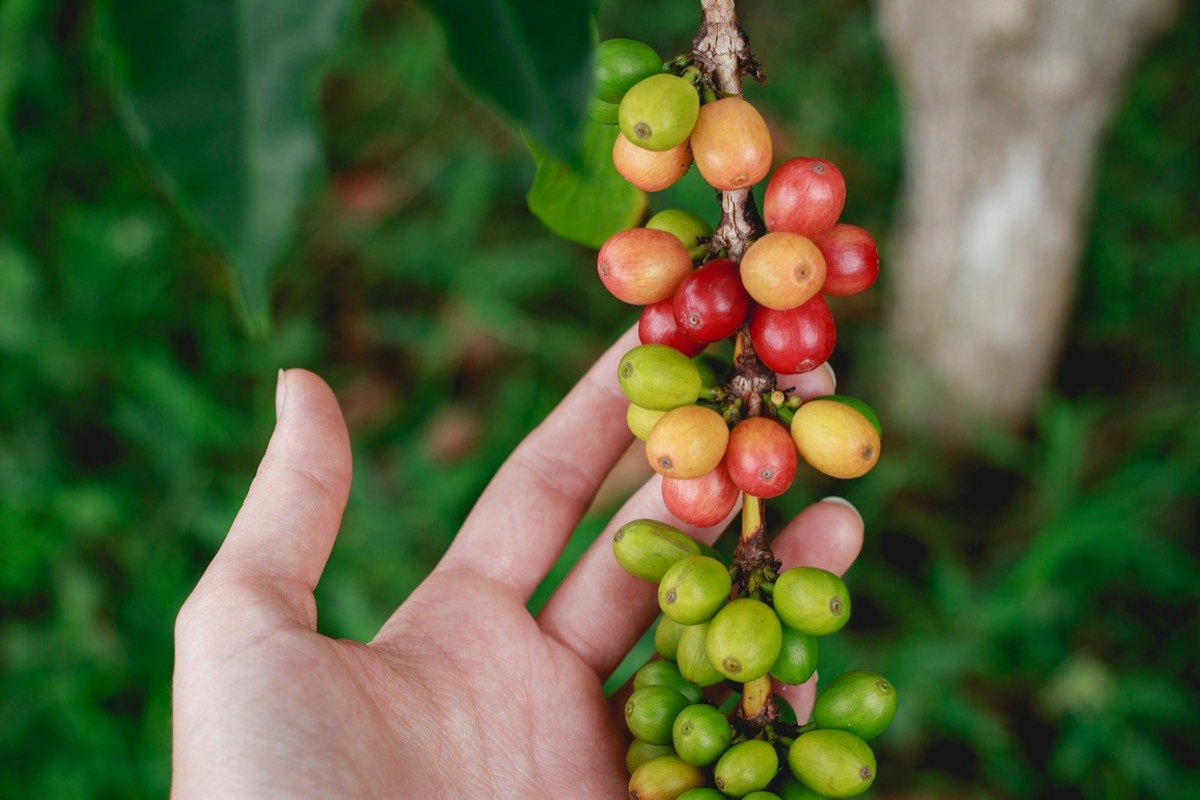
A green coffee bean arrives at the roaster carrying a history that three words are supposed to summarise. Washed means the fruit was taken off the seed before the seed dried. Natural means the whole cherry — skin, pulp and the sticky mucilage layer — stayed wrapped around the seed until it was dry, and was stripped off afterwards in a single pass at the dry mill. Honey sits between the two: the skin and pulp come off at the pulper, and a controlled share of the mucilage is left on the parchment to dry. What separates the three names is how much mucilage is still on the bean when drying starts.
That one variable drags a chain of measurable consequences behind it: drying time, the sugar-and-acid environment the seed sits in, the moisture the bean finally holds, and the defect risks the mill has to sort out. The ranges below describe working mill practice rather than clauses of a published standard, and the regulatory text is cited at the end where a contaminant limit applies.
What the three labels separate
Washed coffee is pulped within hours of picking. The mucilage is then removed either by tank fermentation — commonly 12 to 24 hours, longer in cool weather — or mechanically by a demucilager, after which the parchment dries on raised beds or patios for 8 to 14 days. Natural coffee skips the pulper entirely: whole cherries go to the bed or patio and dry for 15 to 30 days with regular turning, and the dried fruit is hulled off at the dry mill. Honey coffee is pulped but not washed, so part of the mucilage layer stays on the parchment through a drying window of roughly 8 to 20 days.
All three routes converge on the same export specification: green coffee dried to 10 to 12 percent moisture and delivered in 60 kg bags. The words describe where the fruit left the seed and when, not how the mill is equipped. A mechanically demucilaged lot is sold as washed while using a small fraction of the water a tank-fermentation mill draws, and a natural lot can be produced on a patio or on a shaded raised bed with very different airflow.
Mucilage, pectin and the fermentation clock
Mucilage is a pectin-rich gel sitting between the pulp and the parchment. Pectin is the fraction that pectinolytic yeasts and bacteria dismantle during fermentation, and it is also why a mechanical demucilager can finish the job with friction and a little water rather than a tank.
Mills follow the fermentation clock by watching acidity climb as mucilage sugars are consumed and organic acids accumulate, and they stop when the tank reaches the point experience has shown gives the cup they are after. Temperature decides how fast that change happens: a warm tank moves quickly, one held cool needs far longer to reach the point, and a tank that runs too hot risks acetic and phenolic off-notes.
The two failure modes are symmetrical. Stop fermentation too early and mucilage remains on the parchment, clogging the huller and inviting mould. Let it run too long and acetic acid accumulates to the point where the cup reads vinegar rather than fruit — a fault that no roast profile recovers.
Drying time and the moisture target
Green coffee is dried to the 10 to 12 percent moisture band the trade works to, with export contracts sometimes allowing a little above it. Drying past the band leaves the bean brittle enough to split when the huller works on it, which is why mills stop rather than chase a dry number. In properly dried green coffee, water activity stays low enough that mould growth is suppressed.
Naturals carry a whole fruit's worth of sugar and water into the drying bed, so the first days are labour-intensive: patio lots are turned every one to two hours to keep the layer from fermenting in place and to stop case-hardening, where the surface dries faster than the interior and traps moisture inside the bean. Honey lots demand almost the same attention because the remaining mucilage keeps the parchment tacky and clumped.
Honey levels, from white to black
Costa Rican micro-mills formalised a colour scale for honey coffee, and the vocabulary has travelled with the coffees rather than from a standards body. The scale is a grower convention that records how much of the mucilage layer was left on the parchment at the start of drying. Its four names — white, yellow, red and black — run from a thin residue of mucilage on the parchment to the whole layer left in place, and they describe what the mill did rather than a measured percentage.
The scale is useful because it predicts how much fruit contact the seed had, and therefore how far the lot leans toward the sugar-heavy end of the dried-on-fruit spectrum. It is not a statement about the drying curve: a black honey run at high altitude in cool air and turned often behaves differently from one left in a thick layer on a hot patio, even when both left the same mucilage on the bean.
Defects the process makes more or less likely
Drying fruit around a seed is a slower, riskier operation than drying a washed parchment, and the contaminant rules reflect that. Under Commission Regulation (EU) 2023/915, ochratoxin A in roasted and soluble coffee is subject to EU maximum levels; coffee that dries slowly with fruit sugars present is the category where sorting and moisture control carry the most weight. Green grading handles the visible side of the same problem by counting full defects in a 300 g sample and assigning the lot to a grade band.
Fermentation itself writes a separate set of faults. Acetic acid from an over-run tank reads as vinegar; phenolic compounds from high-temperature fermentation read as medicinal or iodine; over-ripe cherry picked late and dried whole produces the heavy, slightly decaying note buyers call foxy. None of these can be removed downstream, which is why the processing decision is made on the day of picking rather than in the roastery.
Reading the label back into a choice
The three names are a shortcut for the amount of time the seed spent in contact with fruit. A washed lot dried with the mucilage gone gives the clean, acidic, transparent result that filter brewers reach for when they want to taste a variety. A natural lot spent two to four weeks inside a drying cherry and carries fruit-derived compounds into the cup, with the heavier body that comes with them. A honey lot is the dial between the two, and the dial has four marked positions rather than two.
For buying decisions, the label worth asking for is the drying one. A mill that can tell you the mucilage share it left on a honey lot, the number of days on the bed and the moisture reading at bagging has told you more about the coffee than the words on the front of the bag ever will.
Method: The process variables on this page — mucilage retention, fermentation duration, drying time, moisture and water activity targets — are given as the working ranges the trade uses rather than as clauses of a published standard. The contaminant controls come from the regulatory text cited at the end, and the peer-reviewed study listed there is the reference for how processing shows up in the cup.
Boundary: The figures described here are mill-and-drying-bed ranges, so they characterise what each process does to the seed before it is traded. Which of the three cups a drinker prefers is set by the variety, the altitude, the drying curve the farm actually achieved and the roast the lot receives.
Each processing range here can be traced to the study and the regulatory text above, whose entries carry the date of checking. The EU contaminant rules that a slow-dried coffee has to meet come from the regulation cited as item 1, and the defect-counting convention is the one the trade's own classification uses.