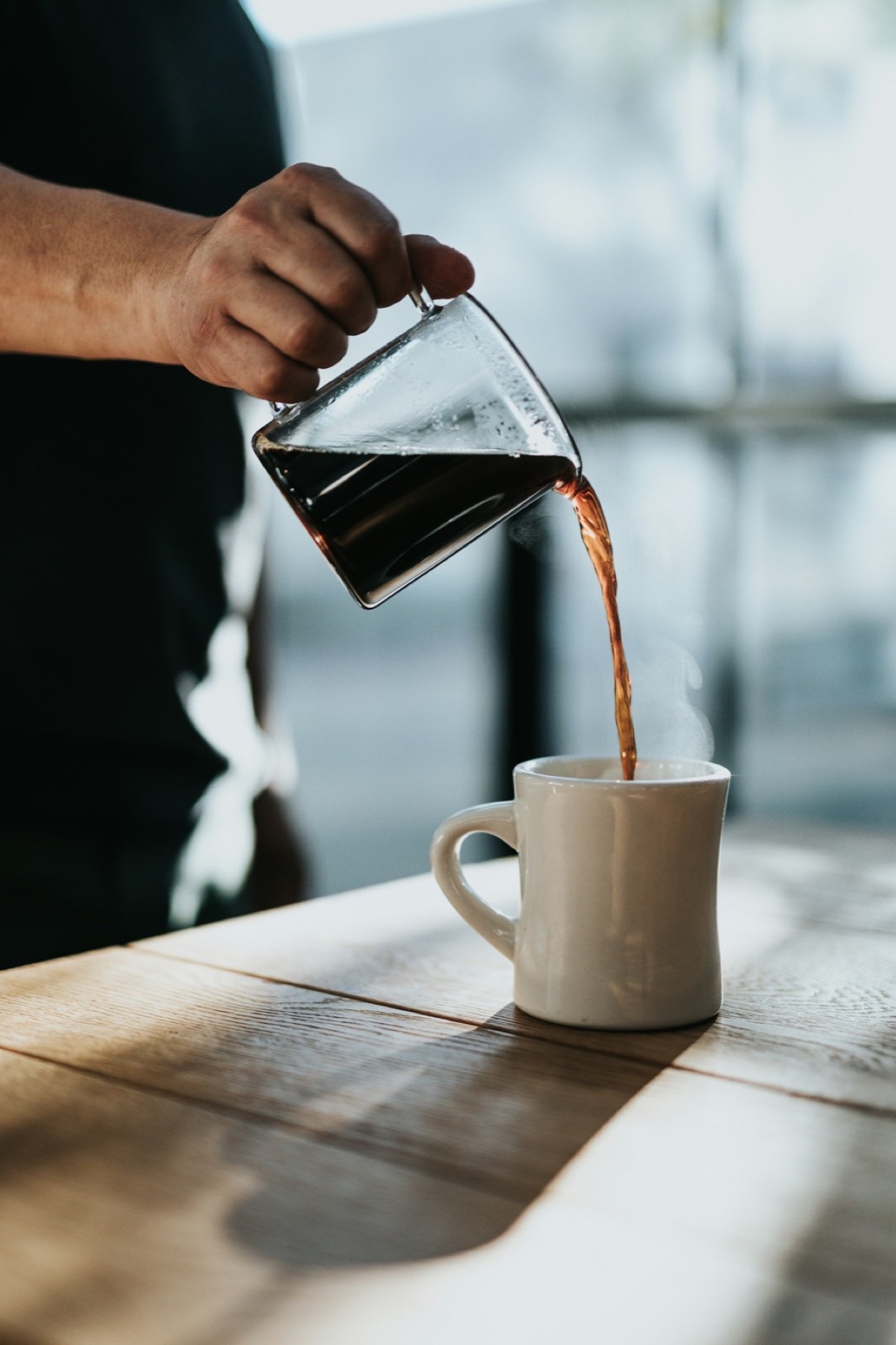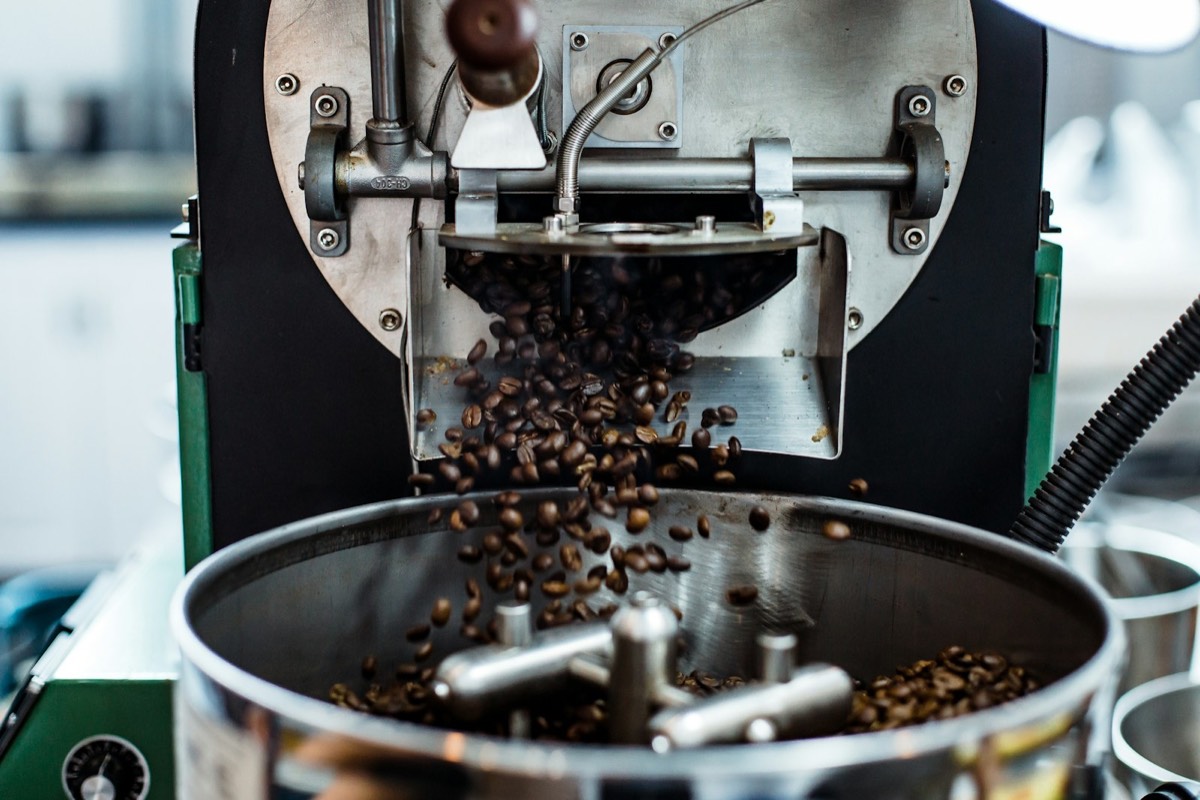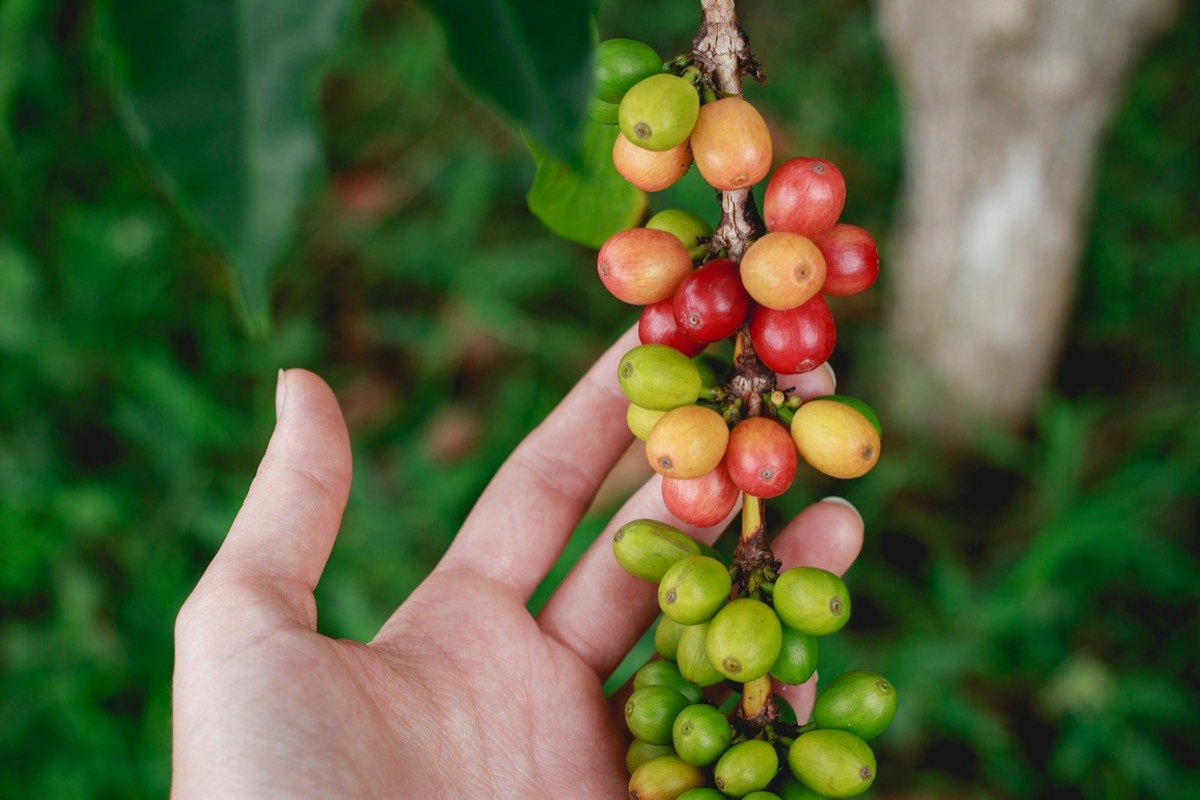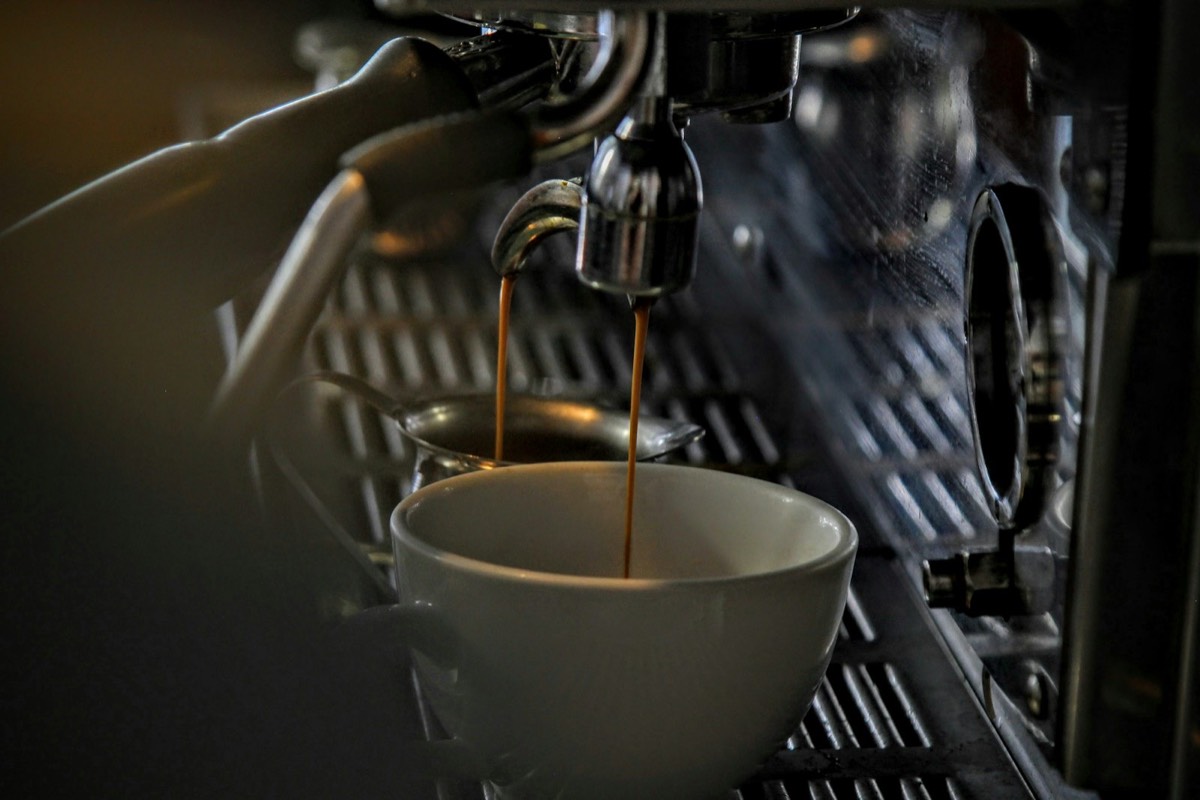
Espresso and filter coffee use the same four inputs — coffee, water, grind, and time — but they set those inputs to values that are nowhere near each other. Espresso forces roughly 9 bar of pressure through a small, fine dose and finishes extraction in about 25 seconds. Filter methods let gravity move water through a coarser bed for several minutes at a ratio near 1:16, and they fill a 250 mL mug instead of a 25–45 mL cup.
What you live with every morning is that setup, not a coffee identity. The numbers below describe what each method asks of your counter, your beans, and your attention, and the last section turns them into four questions you can answer before you buy anything.
What actually differs between espresso and filter
Espresso is defined by pressure. A pump pushes water through a compacted bed of finely ground coffee, and the beverage leaves the basket as a concentrated liquid measured in tens of millilitres. Filter coffee is defined by flow. Water passes through a loose bed under gravity or a light pour, and the result is a larger serving at a much lower concentration.
The variables behind both methods are the same ones: dose, grind, water temperature, and contact time. Change the grind on an espresso grinder and the 25-second extraction can swing by several seconds; change it on a pour-over and the drain-down time moves instead. Published standards exist for both sides of that split — the Specialty Coffee Association maintains specifications for home coffee brewers (SCA-310), home coffee grinders (SCA-320), and semi-automatic and automatic espresso machines (SCA-350) [1].
One practical consequence: the two methods want different grinders. Espresso needs a grinder that can hold a fine median and a controlled share of very small particles. Filter brewing is more forgiving of a slightly uneven grind.
Brew ratio and yield: 18 g in, 36 g out versus 60 g per litre
Espresso recipes are written as weight in and weight out. A common modern café-style recipe is 18 g of ground coffee producing 36 g of beverage, a 1:2 ratio [2]. Traditional Italian-style protocols are longer: 15–17 g of coffee yielding 70–90 mL for two servings, which works out close to 1:4.5 per shot [3]. Both are espresso; the ratio is a recipe choice, not a definition.
Filter ratios are usually expressed per litre of water. Published filter protocols use 1:15 for a V60 pour-over and 1:16.6 — stated as 60 g of coffee per litre — for an automated single-cup filter brewer run at 93 °C [4]. The SCA cupping method sits at the weak end, at 0.055 g/mL, normally 8.25 g per 150 mL, which is about 1:18 [5].
A detail that explains a lot of "why is my brew smaller than my recipe": the wet coffee bed keeps water. In the V60 protocol above, retention was about 2.1 times the coffee mass, so a 1:15 recipe with 20 g of coffee yields roughly 290 mL in the cup rather than 300 mL [4].
Pressure, temperature, and time at a glance
| What you compare | Espresso | Filter (pour-over or drip) |
|---|---|---|
| Brew ratio (coffee : water) | 1:2 for an 18 g in / 36 g out recipe [2]; about 1:4.5 in traditional two-shot protocols (15–17 g to 70–90 mL) [3] | 1:15 for V60, 1:16.6 (60 g/L) for automated filter [4]; SCA method about 1:18 [5] |
| Pressure | about 9 bar [3] | no pump — gravity and pour |
| Water temperature | 92–94 °C [3] | 93 °C in published filter protocols [4]; most home recipes sit a few degrees either side of that figure |
| Brew time | 25 s ± 3 s of extraction [3] | 3–5 minutes of steeping in the SCA method [5]; a pour-over is paced by hand |
| Grind class | fine, 300–600 µm [5] | medium-fine to medium, roughly 600–800 µm [5] |
| Serving size | 25–45 mL per shot [3] | about 250 mL per serving [6] |
| Gear cost at public prices | machine from $299.95 (Breville Bambino, MSRP) [7] | drippers, kettles and servers, each bought as a separate listing [8] |
| Caffeine per serving | 63.06 mg per 25 mL shot [6] | 185.48 mg per 250 mL, V60 [6] |
| Cup character | concentrated; per sip it carries far more dissolved material | larger and lighter-bodied; paper holds back oils and fine particles |
Read the table as a list of decisions rather than a scoreboard. The pressure row and the temperature row are hardware questions: you buy a pump or you do not. The ratio, time, and grind rows are habits you can change on any given morning.
Grind size in microns
Particle size is where the two methods separate hardest. Espresso grind is characteristically bimodal: one main population of particles plus a measured share of fines smaller than 100 µm, and that fines share predicts extraction time more strongly than average particle size does [9].
Descriptions of grind classes in the coffee literature are not perfectly unified, but the working bands are fine at 300–600 µm, medium at 600–800 µm, and coarse at 800 µm and above; brew methods then sit across those bands, with pour-over in the medium-fine range and French press in the medium-coarse range [5].
For a home setup that means:
- Espresso needs the fine band and, just as important, a stable fines share. Two grinders can hit the same median and still pull differently [9].
- Pour-over works in the medium-fine band. If your grinder produces a lot of dust at that setting, expect a slower drawdown.
- Drip machines are the least sensitive of the three because the water path is fixed.
Caffeine per cup and what a cup costs
Caffeine tracks serving volume more than brewing style. Measured per serving, a 25 mL espresso contains 63.06 mg of caffeine, while a 250 mL filter serving contains 185.48 mg from a V60, 206.88 mg from a French press, and 195.90 mg from a simple infusion [6]. Espresso is about four times more concentrated per millilitre, but the serving is roughly a tenth the size, so a single shot lands well below a mug of filter coffee.
Ingredient cost runs the other way for most households. An 18 g espresso dose carries more coffee per serving than a filter dose brewed at a similar strength, so the bean cost follows the dose you choose; Peet's lists its Major Dickason's blend at $21.95 per pound and prices it at 48 cents a serving across about 45 servings, a figure that assumes its own serving size rather than a 250 mL mug [10]. Equipment is where the gap is widest: a home espresso machine starts around $299.95 at list price [7], while pour-over gear — a dripper, a kettle and a server — is bought as three separate items [8].
So the honest cost picture is: filter is cheaper to start, espresso is cheaper per millilitre of coffee but dearer per serving in beans and much dearer in hardware.
Choose your method in four questions
Answer these in order. The first "no" usually decides it.
- How many minutes do you have before you leave? An espresso extraction takes 25 s ± 3 s once the machine is warm, and a drip brewer runs unattended [3]. A pour-over asks for 3–5 minutes of your attention in the same window [5]. If you will not stand at the counter, cross pour-over off first.
- How much do you want in one sitting? One 25–45 mL shot, or about 250 mL [3][6]. Two people drinking mugs of coffee are better served by a filter method or two consecutive shots.
- Which cup do you actually prefer? Concentrated and heavy, or larger and clearer. Paper filters retain oils and fine particles, which is the main mechanical reason the two cups taste different at the same bean.
- What cleaning will you repeat daily? Espresso adds a puck knock, a portafilter rinse, and periodic backflushing and descaling on your machine's schedule. Pour-over adds a paper filter to discard and a cone to rinse; a drip machine needs descaling on its own interval. Pick the routine you will still do in week six.
If two answers point in different directions, the tiebreaker is question 3: the method you enjoy drinking is the one you will keep clean.
Method: This page compares espresso and filter brewing from published standards and research — the Specialty Coffee Association standards and the peer-reviewed studies listed at the end — with equipment and ingredient prices taken from the brand and retailer pages cited alongside them.
Boundary: The figures are process measurements — brew ratio, pressure, water temperature, contact time, grind class, serving volume and caffeine content per serving — so they describe how each method treats the coffee. Which of the two cups a drinker prefers comes down to the coffee, the grinder and personal taste.
- Specialty Coffee Association — Standards (SCA-310 Home Coffee Brewers; SCA-320 Home Coffee Grinders; SCA-350 Semi-Automatic and Automatic Espresso Machines)accessed 2026-09-12
- Analysing extraction uniformity from porous coffee beds using mathematical modelling and computational fluid dynamics approaches. PLOS ONE (2019). doi:10.1371/journal.pone.0219906accessed 2026-09-11
- Cross-Cultural Comparison of the Espresso Protocol Repeatability. Foods (2025). doi:10.3390/foods14040593accessed 2026-09-11
- Discrimination of Filter Coffee Extraction Methods of a Medium Roasted Specialty Coffee Based on Volatile Profiles and Sensorial Traits. Foods (2023). doi:10.3390/foods12173199accessed 2026-09-11
- Does Coffee Have Terroir and How Should It Be Assessed? Foods (2022). doi:10.3390/foods11131907accessed 2026-09-11
- Influence of Brewing Methods on the Bioactive and Mineral Composition of Coffee Beverages. Molecules (2025). doi:10.3390/molecules30204080accessed 2026-09-11
- Breville — the Bambino compact espresso machine (BES450), listed price $299.95accessed 2026-09-12
- Seattle Coffee Gear — pour-over category listing (category page for drippers, kettles and servers; no price range is quoted)accessed 2026-09-12
- The role of fines in espresso extraction dynamics. Scientific Reports (2024). doi:10.1038/s41598-024-55831-xaccessed 2026-09-11
- Peet's Coffee — Major Dickason's Blend product page (roaster listing, $21.95 per pound and 48 cents per serving across about 45 servings)accessed 2026-09-12
Start with the numbers you can control today rather than with hardware. If you already own a grinder, check which band it reaches: fine for espresso, medium-fine for pour-over. Then fix the ratio first — 1:2 for espresso, 1:15 to 1:18 for filter — and change only one variable at a time. A kitchen scale that reads to 0.1 g does more for repeatability than any accessory, and it costs less than a bag of beans [3][5].