A hand grinder and an electric grinder hold the same beans and cut them with the same kind of steel burr. The difference is where the turning force comes from, and that one change rearranges everything a home brewer notices: how many grams fit in a session, how long you stand at the counter, what the thing weighs, and which parts wear out first.
Every figure below is published product or retailer data from the makers and shops listed under Sources, checked in September 2026. Prices are the US list prices shown on those pages; sales and regional taxes move them, so confirm on the product page before ordering. The one formal home-grinder standard, SCA-320, is member-restricted, so the numbers here come from the product data each maker and retailer publishes.
What the motor changes
Take the motor out and three parts leave with it: the motor, the switch, and the gearbox. What stays is a burr set, a shaft, bearings, and a crank. That is why the hand models are the light ones — Kinu publishes 780 g for the M47 Phoenix and 1175 g for the M47 Classic, both built around 47 mm conical burrs with a 40 g capacity.
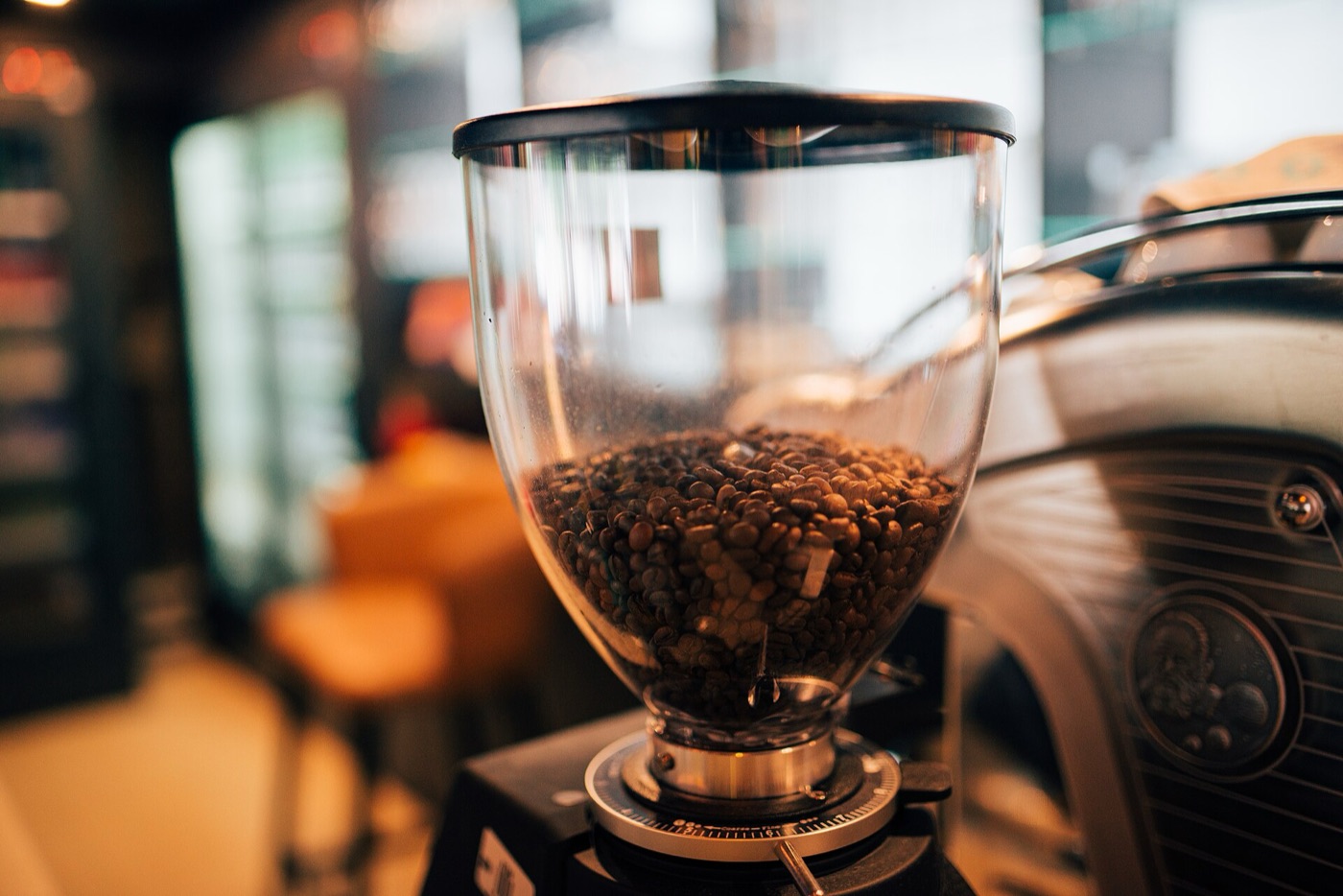
Electric models carry the motor and the weight that comes with it. Seattle Coffee Gear lists the Baratza Encore as a mains-powered model; DF64 Coffee lists the DF64 Gen 2 with a 250 W motor, sold in 100–120 V and 220–240 V versions, and a listing weight of 7.7 kg.
Burr diameter is not the dividing line between the two designs. Similar burr sizes show up on both sides of the shelf: 38 mm stainless steel on the Timemore Chestnut C3, a conical steel set of comparable diameter on the Encore, 47 mm conical on the Kinu M47, and 68 mm conical on Kinu's tabletop M68.
Burr size and dose capacity
Two published numbers settle most of the daily fit: burr diameter, and the grams the catch cup, jar, or hopper holds.
On the hand side, the Chestnut C3's catch cup is sized for a single dose, with a 30 g XL cup option, and its dial runs 0–90 clicks. The Kinu M47 Classic states a 40 g capacity, and the Comandante C40 Nitro Blade BLACK is supplied by its maker with two bean jars.
On the electric side the container grows with the machine. The Encore is built for single cups or a full pot without a refill. The DF64 Gen 2 is built for single dosing instead, with 64 mm flat burrs. A larger flat burr sits above it in price and size: Clive Coffee lists the Eureka Atom W 65, a 65 mm flat burr grinder, at $1449.
Capacity is not the same as portability. A full-pot machine is convenient on a counter and irrelevant on a campsite, where the useful figures are grams per fill and total weight.
Speed and power, in watts and seconds
Published power figures make the electric side directly comparable, and the battery models make it explicit.
The Timemore Whirly 01S is the smallest complete electric grinder in this set: a 60 W motor, a 7.4 Wh battery that charges in about 3 hours, roughly 30 seconds for a pour-over dose and about 90 seconds for an espresso dose, and enough charge for up to 20 doses of 20 g. It weighs 760 g and measures 72 × 190 mm.
Mains models trade that battery for capacity. The Encore runs a 40-step dial through a conical burr set; the DF64 Gen 2 runs 250 W through 64 mm flat burrs.
Hand grinders have no published wattage, because the torque is your arm. The product data lists their grams, millimetres, and weight rather than a grind time, so the practical comparison is dose capacity: the Chestnut C3's single-dose cup covers a cup or two per fill, while the Kinu M47's 40 g covers two mugs or a small pot before you refill.
The comparison table at a glance
Prices and figures are as listed by the makers and retailers named under Sources, checked in September 2026.
| Grinder | Type and listed price | Dose per fill | Burr and dial | Power and speed | Weight | Noise | Upkeep and warranty |
|---|---|---|---|---|---|---|---|
| Timemore Chestnut C3 | Hand — $79 standard, $89 with the 30 g XL catch cup | Catch cup sized for a single dose; 30 g XL cup option | 38 mm stainless steel burrs; 0–90 click dial | No motor — manual crank, no plug and no battery | No net weight listed | No motor or fan | No motor, switch, or gearbox to wear |
| Kinu M47 Classic | Hand — $349 | 40 g capacity | 47 mm conical burrs | No motor — manual crank | 1175 g (maker-listed) | Kinu describes manual operation as quiet, without motor noise | Maker states a 5-year warranty on its grinders |
| Timemore Whirly 01S | Battery electric — $169 | One dose at a time, on a 20 g espresso dose basis | Not listed | 60 W motor; 7.4 Wh battery; ~30 s pour-over dose, ~90 s espresso dose; 3 h charge; up to 20 doses of 20 g per charge | 760 g; 72 × 190 mm | Motor-driven; no dB figure published by the maker | Rechargeable battery plus burrs |
| Baratza Encore | Countertop — $149.95 | Built for single cups or a full pot | Conical steel burrs; 40 stepped settings | Mains motor; wattage not stated | 8.0 lb listed shipping weight (about 3.6 kg) | Motor-driven; no dB figure published | Replacement burrs sold separately; warranty per the maker's terms |
| DF64 Gen 2 | Countertop — $449 | Single dosing | 64 mm flat burrs | 250 W motor; 100–120 V and 220–240 V versions | 7.7 kg listed | Motor-driven; no dB figure published | Replacement burr sets sold separately |
Two more published prices sit at the top of the electric range for reference: Fellow lists the Ode Gen 2 at $399.95, and its Ode Gen 2 Brew Burr replacement set at $80.
Upkeep, warranty, and replacement burrs
Burrs are a wear part on both designs, so the useful question is what else is inside the housing. A hand grinder adds a crank and bearings to the burr set, and nothing electrical. An electric grinder adds a motor, a switch, and on hopper-fed models a container and lid that see coffee oils every day.
Replacement cost is easiest to read as a share of the machine. Fellow sells the Ode Gen 2 Brew Burr set for $80 against a $399.95 grinder, about one fifth of the purchase price for a fresh cutting surface.
Warranty length is the other published number to compare, and it differs sharply by maker. Kinu states a 5-year warranty across its grinders; other models carry the warranty term printed on their own product page. Neither figure changes how the coffee tastes, but both say something about how many service parts each maker expects to ship.
A decision path: cups per day and nights away
Work through these four checks in order. Each one turns on a number or a yes/no answer.
- Weigh your daily dose. Up to 30 g a day, one or two cups — either design fits: the Chestnut C3's 30 g XL cup or the Kinu M47's 40 g. If a session runs 60 g or more, or you brew several cups back to back, take the countertop route, where the Encore's full-pot workflow and the DF64 Gen 2's single-dose workflow both finish the job without a refill.
- Count nights away from a socket. Two or more nights a month where you brew without mains power makes weight and power the deciding numbers: the Kinu hand models run 780 g to 1175 g and need no charge, while the Whirly 01S weighs 760 g and needs about 3 hours on a charger for up to 20 doses of 20 g. Pick the hand grinder if you would rather not manage a battery, and the 760 g battery model if you would rather not crank.
- Decide how finely you need to repeat a setting. Espresso benefits from a dial with many small steps — the Chestnut C3 offers 0–90 clicks — while a 40-step dial such as the Encore's is aimed at filter and press brewing.
- Set a ceiling and read the burr size across it. A hand grinder starts at $79, the conical-burr Encore sits at $149.95, the 64 mm flat DF64 Gen 2 and the Ode Gen 2 at $399.95–$449, and a 65 mm flat espresso grinder such as the Atom W 65 at $1449. As the burr climbs from 38 mm to 65 mm, the weight climbs from 760 g to 7.7 kg, and the counter space climbs with it.
Answer checks 1 and 2 with real numbers and the choice usually makes itself: a hand grinder for small doses and travel, an electric grinder for volume and hands-free speed. Checks 3 and 4 only decide which model inside that group.
Method: This page compares hand and electric grinders using the manufacturers' and retailers' published product data — burr size, dose capacity, motor power, weight, warranty and listed price — as listed under Sources. The one formal home-grinder standard, SCA-320, is member-restricted, so every figure quoted here comes from maker and retailer product data.
Boundary: Published grinder data describes the machine as built and as listed — burr diameter, container capacity, motor power, weight and warranty — so it sets out design and capacity. How a particular unit performs inside those published limits comes down to burr alignment and burr condition rather than to anything the listing states.
- Seattle Coffee Gear — Baratza Encore Coffee Grinder, product data endpoint (40 stepped grind settings, built for single cups or a full pot, $149.95, 8.0 lb / 3629 g listed shipping weight)accessed 2026-09-12
- Timemore — Chestnut C3 (Stone White), product data endpoint (38 mm stainless steel burrs, dial 0–90 clicks, grinds up to 30 g, $79 Standard / $89 XL Catch Cup)accessed 2026-09-12
- Timemore — Whirly 01S Portable Electric Grinder (760 g, 72 × 190 mm, 60 W motor, ~30 s pour-over dose and ~90 s espresso dose, 7.4 Wh battery, 3 h charge, up to 20 doses of 20 g, $169)accessed 2026-09-11
- Kinu — M47 Phoenix (47 mm conical burrs, 780 g, 40 g capacity, $219, 5-year warranty)accessed 2026-09-11
- Kinu — M47 Classic (47 mm conical burrs, 1175 g, 40 g capacity, $349)accessed 2026-09-11
- Kinu — M68 tabletop hand grinder (68 mm conical burrs, listed at $1199, maker-listed weight 4 kg)accessed 2026-09-11
- Comandante — C40 Nitro Blade BLACK ($259, Nitro Rex steel burr set, supplied with two bean jars)accessed 2026-09-11
- DF64 Coffee — DF64 Gen 2 Single Dose Coffee Grinder (64 mm flat burrs, 250 W motor, 100–120 V and 220–240 V versions, 7.7 kg listing weight, $449)accessed 2026-09-11
- Fellow — Ode Brew Grinder Gen 2 ($399.95)accessed 2026-09-11
- Fellow — Ode Gen 2 Brew Burrs, replacement burr set ($80)accessed 2026-09-11
- Clive Coffee — Eureka Atom W 65 espresso grinder (65 mm flat burrs, $1449)accessed 2026-09-11
- Specialty Coffee Association — Standards (published list includes SCA-320 Home Coffee Grinders: Specifications and Test Methods; the standard itself is member-restricted)accessed 2026-09-11
Match the numbers to the mornings you actually have. Grams per day set the capacity you need, nights away set the weight and the power source, and the dial range sets how finely you can repeat a setting. A hand grinder wins on weight, noise, and parts count; an electric grinder wins on dose size and on grinding while you do something else.