Decaffeinated coffee is sold with a process word on the front of the bag — Swiss Water, CO₂, water processed, naturally decaffeinated — that describes the chemistry used to pull caffeine out of the bean. Those words separate three genuinely different industrial routes, and each route has published operating conditions and a legal residue limit carrying its name.
The label is worth reading carefully because it is the only part of the process a drinker can check. Caffeine is a specific molecule with a known mass, the legal ceilings are written into regulations, and the routes differ in pressure, temperature and the solvent that touches the bean. Everything below is about that layer of the bag.
Every commercial route works on green coffee
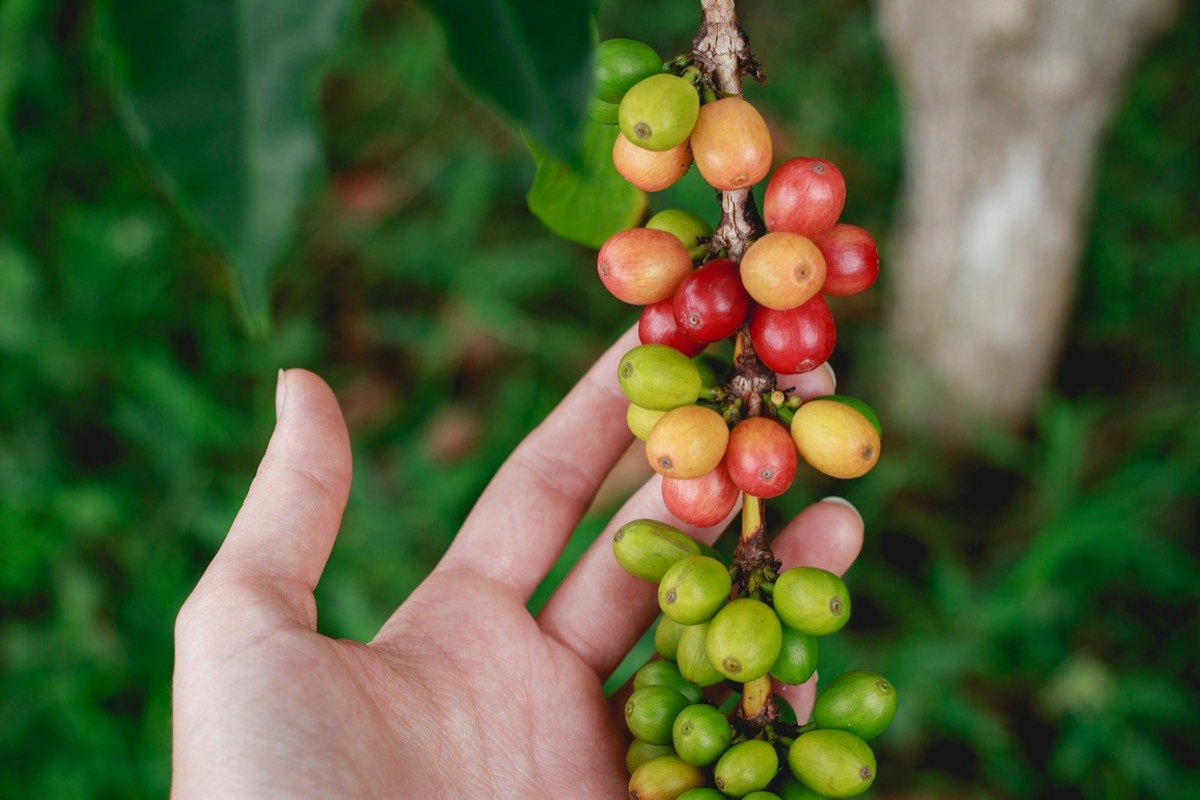
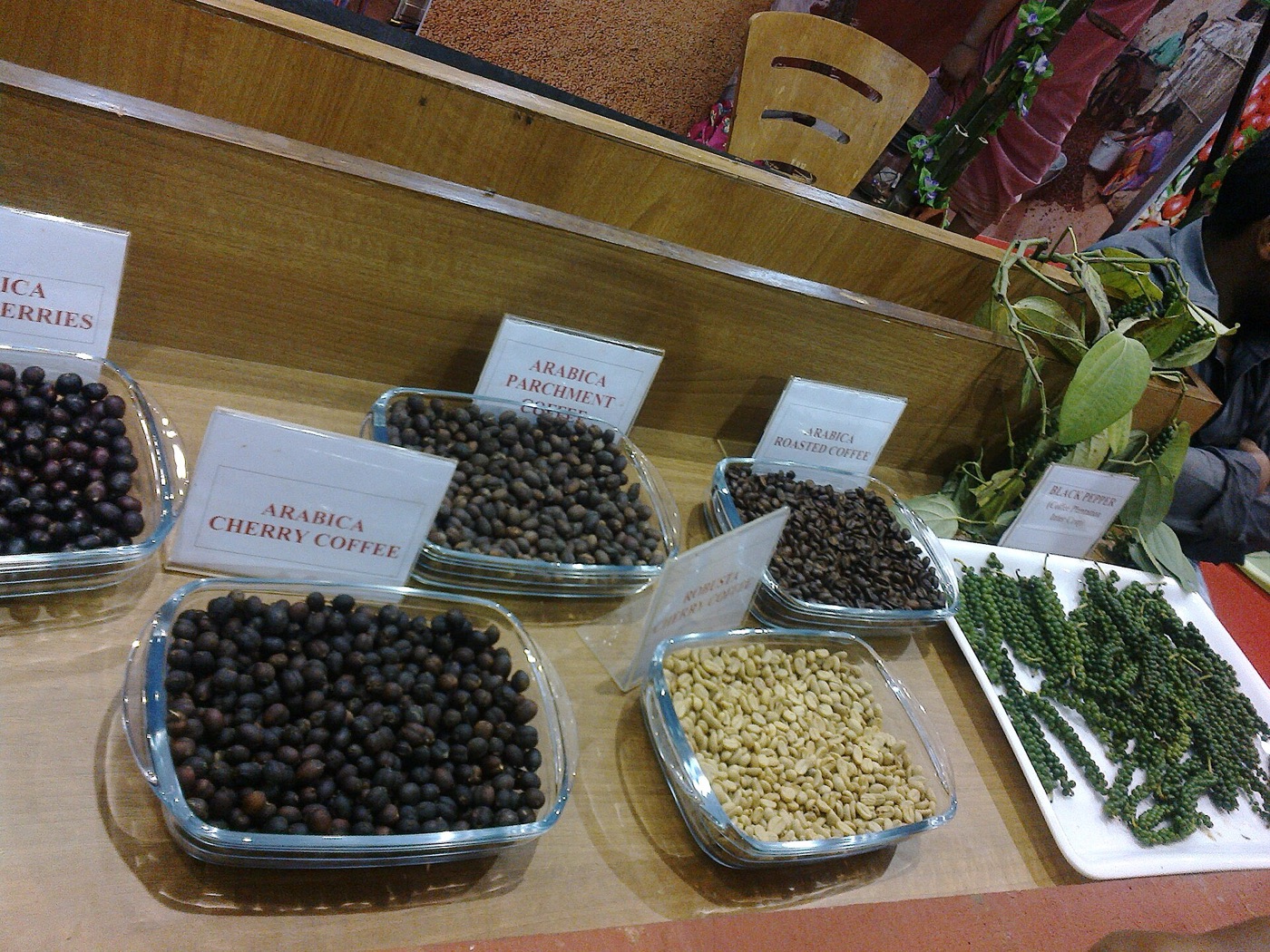
Caffeine is already in the seed before the roast, and roasting does not remove it — which is why decaffeination is done at the green stage, on dried beans, before they go anywhere near a roaster. That single fact fixes the starting load: arabica green coffee carries roughly 1.0 to 1.5 per cent caffeine by dry weight, and robusta about 1.6 to 2.5 per cent, with the species average sitting near 1.2 and 2.2 per cent respectively.
So the job description is precise. A plant has to take a bean holding the equivalent of 12 grams of caffeine per kilogram of dry matter and drive that down to a fraction of a gram, without destroying the cell structure that the roast will later need to expand.
Solvent routes: direct and indirect
Two solvents dominate this family: methylene chloride, also called dichloromethane, and ethyl acetate. In the direct method the beans are steamed first, which opens the cell walls, and then washed with the solvent so that caffeine migrates out of the bean and into the solvent phase; the beans are steamed again to strip the remaining solvent, and re-dried.
The indirect method inverts the order. Beans are soaked in water until the caffeine dissolves into the water, the caffeine-loaded water is then treated with solvent to extract the caffeine from it, and the cleaned water — already saturated with coffee solubles — is returned to the next batch. The beans themselves never contact the solvent in this version, which is why it is sometimes marketed separately.
Residues are regulated rather than assumed away. The US food-additive rules permit methylene chloride for coffee decaffeination and cap the residue in the finished roasted coffee at 10 parts per million; the European Union regulates extraction solvents under Directive 2009/32/EC, which sets residue limits for the solvents permitted in food production.
Water routes: separation by adsorption, not by solvent
Water-process decaffeination keeps the same first step as the indirect solvent method — soak the green beans in water until caffeine leaves the bean — and changes what happens to that water. Instead of solvent, the caffeine is captured on activated carbon or a resin bed, and the water is returned to the beans.
The trick is saturation. Fresh water would strip flavour compounds along with the caffeine, so the process water is loaded with coffee solubles first, which leaves the caffeine as the component that is still undersaturated and therefore the one that keeps migrating out. Commercial versions of this route, including the trademarked Swiss Water Process, run as repeated soak-and-filter cycles rather than a single pass, which is why they take longer than a solvent plant's contact stage.
Supercritical carbon dioxide
Carbon dioxide becomes supercritical above 31.1 °C and 73.8 bar, the point at which it stops behaving like a gas and a liquid separately. In that state it penetrates the green bean like a gas and dissolves caffeine like a liquid, with a selectivity that leaves most of the coffee's non-volatile matrix alone, and it leaves no solvent residue because the solvent is carbon dioxide.
Industrial decaffeination runs well above the critical point rather than at it, in the hundreds of bar, because caffeine's solubility in supercritical CO₂ rises steeply with pressure. Caffeine is recovered from the CO₂ by washing with water or adsorbing it on carbon, and the carbon dioxide is compressed and recycled into the next batch, which is the main reason the route is capital-heavy and water-light.
What "decaffeinated" is allowed to mean
Two different ceilings apply, and they are not the same number. Within the European Union, Directive 1999/4/EC sets the caffeine content of decaffeinated coffee extract at no more than 0.3 per cent of the dry matter — a rule written for soluble coffee, where the dry matter is the powder rather than the bean. For roasted coffee, the working convention across European and North American markets is 0.1 per cent caffeine on a dry basis.
Run that convention against the starting load and the arithmetic of the process becomes visible. Driving arabica from about 1.2 per cent to 0.1 per cent is a reduction of more than 90 per cent, and the process specifications quoted by commercial decaffeinators are written to remove 97 per cent or more. A decaf bag therefore describes a large, measured reduction to a defined ceiling, not the absence of the molecule.
What the label does not prove
Three things sit outside the process word. First, trademarks are not routes: a protected name identifies the plant that ran the process, while "water processed" and "CO₂" name the chemistry, so two bags can carry different words and the same underlying separation step. Second, decaffeination removes more than caffeine — some water-soluble chlorogenic acids and other low-molecular compounds leave with it, and the size of that loss tracks contact time and the number of cycles rather than the label. Third, caffeine per serving is still set at the brewing stage: a 25 mL decaf espresso and a 250 mL decaf filter mug are different doses of a low-caffeine drink, and the published ratio between them follows serving volume rather than the decaf process.
What the label does establish is narrower and firmer: which solvent family, if any, was permitted to contact the coffee, and therefore which residue limit a regulator has to enforce against the bag. That is enough to choose between the routes on grounds that can be checked.
Method: This page is built from the primary regulatory texts governing decaffeination and extraction solvents and the compositional literature on caffeine in coffee listed at the end, with the operating figures for each route quoted as the physical constants and process parameters that define it.
Boundary: The numbers here describe the chemistry and the legal frame — caffeine content of green coffee, critical point and working pressure, solvent residue ceilings and the caffeine limit for decaffeinated extract — so they describe what each route does to the bean. The sensory character of a particular decaf lot is settled by the coffee, the roast and the brew.
- Directive 1999/4/EC of the European Parliament and of the Council of 22 February 1999 relating to coffee extracts and chicory extracts, Art. 2(b) — legislation.gov.ukaccessed 2026-09-12
- Directive 2009/32/EC on the approximation of the laws of the Member States on extraction solvents used in the production of foodstuffs and food ingredients, Annex I — legislation.gov.ukaccessed 2026-09-12
- US Code of Federal Regulations — 21 CFR 173.255, Methylene chlorideaccessed 2026-09-11
- European Commission, Directorate-General for Health and Food Safety — Extraction solventsaccessed 2026-09-11
- Influence of Brewing Methods on the Bioactive and Mineral Composition of Coffee Beverages — Molecules (2025), doi:10.3390/molecules30204080accessed 2026-09-11
The regulatory ceilings above are quoted from the instruments named beside them, and the composition ranges are the ones the cited literature reports for green coffee of each species. The critical point and the direction in which caffeine solubility changes with pressure are physical properties of carbon dioxide and caffeine, and the operating figures for the water and solvent routes are the process parameters that define each route in the regulatory and technical descriptions cited.