A bag of Colombian coffee usually carries three separate claims inside the same rectangle of print: a place, a person or group, and a method. They are backed by three different systems of proof, and they fail in three different ways. The place claim is a geographical indication with a registration date. The producer claim is a traceability line. The process claim is a statement about what happened at the mill, and only the first two can be checked against a public register.
Untangling them takes a few minutes and saves a purchasing mistake, because the most prominent name on the bag is often the least specific one. The sections below separate the three layers and give the figures attached to each.
Three claims on one bag, three systems of proof
The strongest place claim in Colombian coffee is the national one. Café de Colombia was registered in the European Union as a protected geographical indication in 2007, which makes the name enforceable across the EU market rather than descriptive. Below that sit department-level denominations: Café de Nariño, recognised in 2011, and Café del Huila, recognised in 2013, are the two best known, and both define a territory with published production conditions.
The producer layer is a contract rather than a register. A farm name, a cooperative name or a lot number identifies the party that delivered the coffee to the mill, and it is verified by tracking records rather than by a public filing. The process layer is the weakest of the three as a claim: washed, natural and honey describe a sequence of operations, and no register in Colombia certifies which one was used. That claim rests on the exporter's paperwork and on what the coffee looks and tastes like.
The region layer: departments, not one origin
Colombia's coffee is grown across more than twenty departments, and the producing map has a clear head. Huila is the largest single producing department and has held that position for years, followed by Antioquia, Tolima, Cauca and the three Eje Cafetero departments of Caldas, Quindío and Risaralda. The coffee belt runs along the three Andean cordilleras, which is why the country can be a single origin and still contain sharply different growing conditions.
The departments are the useful unit because they are the level at which the two denominations are drawn and the level at which national statistics are reported. A bag marked Huila, Nariño or Cauca points to a defined territory; a bag marked simply Colombia points only to the country, which spans roughly 840,000 hectares.
The producer layer: families, hectares and the average plot
The National Federation of Coffee Growers, founded in 1927, is the body that organises the sector, and it publishes the structural numbers that make the producer layer legible. Roughly 540,000 families grow coffee in Colombia, working about 840,000 hectares in total. Dividing the second figure by the first gives an average holding of about 1.6 hectares, which is the single most important number on this page for understanding what a farm name means.
A 1.6 hectare average means the typical producer delivers small lots, and that a named farm is usually a smallholding rather than an estate. It also explains why cooperative and association names appear so often on Colombian bags: the units that can fill a container are groups of smallholders, not individual farms. The federation's purchase guarantee, funded through the National Coffee Fund, is the mechanism that gives those smallholders a published reference price to sell against.
The process layer: washed is the default
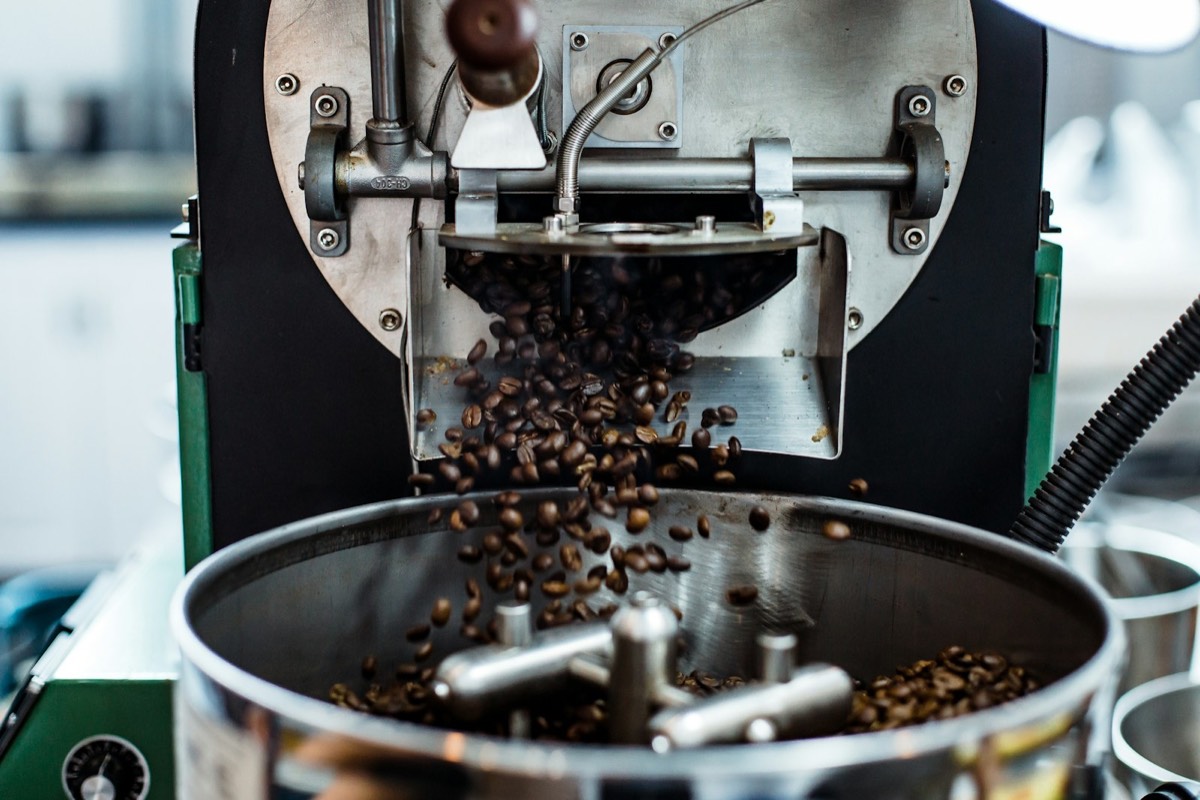
Colombian coffee is overwhelmingly washed, and the standard sequence is short. Cherry is pulped on the day it is picked, fermented for about 12 to 18 hours, washed, and then dried for roughly 8 to 14 days — most often in a covered parabolic drier, the marquesina, which protects the parchment from rain while letting air through. Drying finishes at the 10 to 12 per cent moisture that green coffee is traded at.
Naturals and honeys have grown as a share of Colombian specialty exports, but they remain a deliberate exception rather than a regional default. That matters when reading a bag: a washed Colombian is the base case the country's infrastructure is built around, so a natural or honey version is a choice made by a specific mill, and the mill is usually named on the bag for exactly that reason.
The harvest calendar: two crops, not one
Colombia has two overlapping harvests, and their timing depends on latitude and altitude rather than on one national date. In the southern departments of Huila and Nariño the main crop is picked roughly from April to July, with a smaller mitaca — the second flowering's crop — from October to December. Further north in the Eje Cafetero and Antioquia the main harvest runs later in the year and the mitaca falls in the first half.
For a buyer, the calendar is a freshness question rather than a flavour claim. A lot landed in the second half of the year is likely to be from the southern main crop or the northern mitaca, and the harvest year printed on the bag is the only reliable way to tell which.
What the label leaves out
Three things a Colombian bag rarely states are the ones that decide the cup. The first is variety: Castillo, released by the national research centre Cenicafé in 2005, now dominates plantings because it resists coffee leaf rust, and it sits alongside Caturra, Typica, Colombia and Tabi, released in 2002. Cenicafé itself was founded in 1938 to run the breeding work that produced them.
The second is altitude, which is recorded on internal lot documents but not on retail packaging. The third is the reason the variety shift happened at all: the leaf rust epidemic drove national output from about 12.5 million 60 kg bags in 2007 down to roughly 7.8 million bags in 2011, and the replanting programme that followed replaced a large share of susceptible trees with Castillo. A bag that names a department, a farm and a process has told you a great deal; the variety and altitude behind it are the remaining questions to ask the roaster.
Method: This page separates the geographical, producer and process claims on Colombian coffee using the European Union's geographical indication register and regulation, the National Federation of Coffee Growers' published sector statistics, the national research centre's published variety releases, and the official trade and production datasets listed at the end.
Boundary: The figures describe the structure of the Colombian sector — hectares, grower numbers, average plot size, the denominations in force and the size of the rust-driven decline — so they characterise the country and its labelling system. Which lot from a named department suits a particular drinker is decided by the specific farm and mill.
- Federación Nacional de Cafeteros de Colombia — Estadísticas cafeterasaccessed 2026-09-11
- European Commission — eAmbrosia, the EU geographical indications register (search the register for "Café de Colombia")accessed 2026-09-12
- Regulation (EU) No 1151/2012 on quality schemes for agricultural products and foodstuffs — EUR-Lexaccessed 2026-09-11
- USDA Foreign Agricultural Service — Coffee: World Markets and Trade (PSD coffee circular PDF; Colombia supply and distribution tables)accessed 2026-09-12
- FAO — FAOSTAT, Crops and livestock products (QCL) bulk data file, Production_Crops_Livestock_E_All_Data_(Normalized) (Colombia coffee area and production series)accessed 2026-09-12
- Centro Nacional de Investigaciones de Café (Cenicafé) — Variety releases and technical publications (site home)accessed 2026-09-12
- Departamento Administrativo Nacional de Estadística (DANE) — Estadísticas por tema: Agropecuario (agricultural statistics section)accessed 2026-09-12
- Does Coffee Have Terroir and How Should It Be Assessed? — Foods (2022), peer-reviewed assessment of origin effectsaccessed 2026-09-11
The sector figures above keep the granularity their sources publish — hectares in production, number of producing families, the denominations on the register, and the harvest totals for the years named in the text. Averages here are sums and divisions of those published figures, and each source sits in the list below with the date of checking.