A term earns a place in a working vocabulary when it changes what you measure. The twenty below were picked for that property: each one names something that can be written as a figure, so a recipe card, a roaster note or a menu line becomes a set of values you can compare instead of an impression you have to take on trust.
They are ordered the way decisions usually arrive at the counter — recipe first, then extraction, grind, roast, and finally the processing words printed on origin bags.
Recipe terms: dose, yield, ratio, bloom, agitation
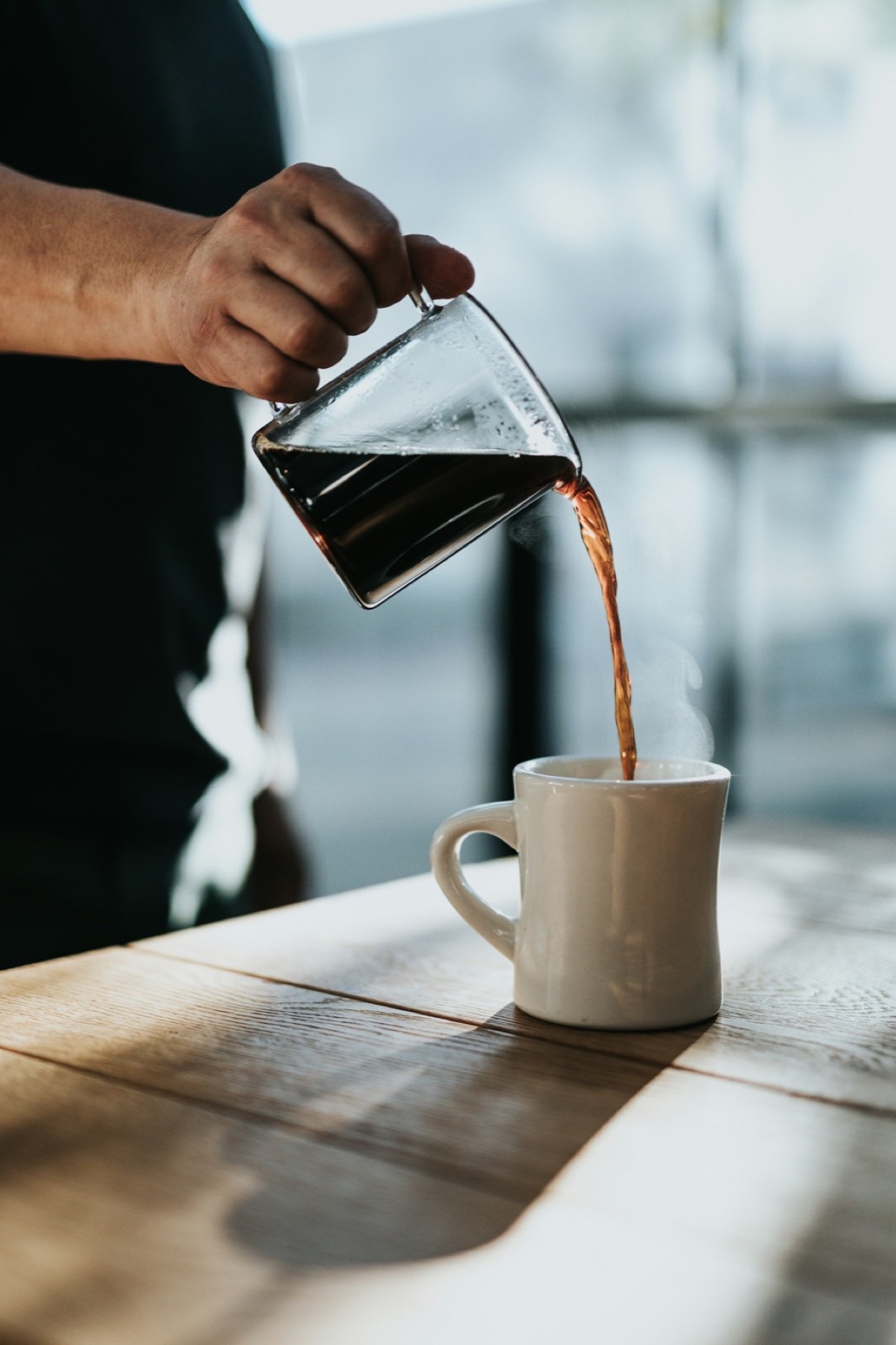
A recipe is four numbers and one action. Dose is the dry coffee, weighed in grams. Yield is the liquid that reaches the cup, also weighed rather than judged by eye. Ratio divides yield by dose. Bloom is the first wetting. Agitation is anything that moves the bed: a stir, a swirl, a faster pour.
- Dose — dry coffee mass. A filter recipe commonly starts between 15 g and 20 g, and an espresso basket is often dosed in the same 15–20 g window.
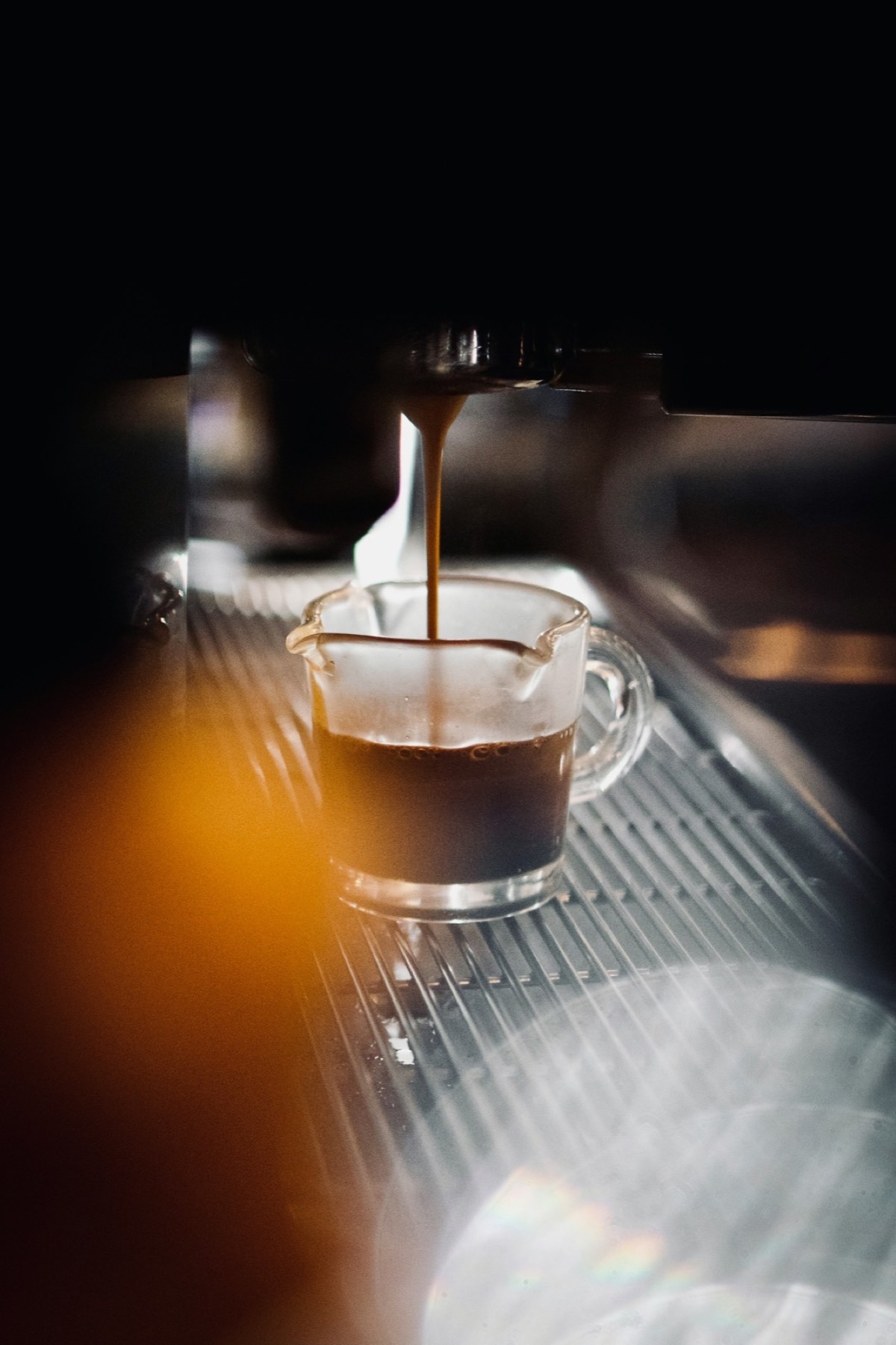
- Yield — beverage mass. A modern espresso recipe stops at roughly twice the dose, so 18 g in produces about 36 g out, a ratio near 1:2.
- Brew ratio — dose against water. Published filter protocols sit between 1:15 and 1:18, and the SCA cupping ratio of 8.25 g per 150 mL works out close to 1:18.
- Bloom — the first pour, around twice the coffee mass in water, held for 30–45 seconds while the bed degasses.
- Agitation — stirring or swirling the slurry. It changes how quickly water moves through the bed, and therefore the time you are timing.
The wet bed keeps part of the water, which is why the scale in the cup reads low. In published V60-style measurements the spent coffee holds roughly twice its own mass in liquid, so a 300 g pour over a 20 g dose can finish nearer 260 g in the server.
Two habits make the rest of this list usable. Weigh dose and yield rather than measuring spoons and jugs, because volume varies enough between spoons to hide real changes. Then change one number at a time, so that a difference in the cup has one candidate cause.
Extraction terms: extraction yield, TDS, refractometer, evenness
The reference band used with the brewing control chart puts extraction yield at 18–22%, and it is the figure that separates "under-developed" from "over-developed" rather than simply "weak" from "strong".
- Extraction yield — dissolved mass divided by dose mass, expressed as a percentage.
- TDS — total dissolved solids, the concentration in the beverage; the same reference band places it at 1.15–1.45% for a brew sitting in the 18–22% range.
- Refractometer — the instrument that reads TDS as a percentage from a cooled, filtered sample, turning a taste into a number.
- Evenness — how uniformly water reached the bed. Two brews can land on the same extraction yield and still differ, because one worked the whole bed while the other worked the outside of the puck hard and the centre lightly.
The arithmetic connecting them is short. A 250 g beverage at 1.30% TDS holds about 3.25 g of dissolved coffee; from an 18 g dose that is an extraction yield near 18%. Keep the same cup and the same reading but raise the dose to 20 g, and the yield falls to roughly 16% — the quickest demonstration of why dose and taste cannot be discussed separately.
Evenness is where tasting language earns its place. An uneven brew presents sour and bitter at once, because the under-extracted and over-extracted fractions are both in the cup. A flat, hollow cup points the other way, at a bed that was worked hard and thin.
Grind terms: particle size distribution, fines, burrs, retention
A grinder does not produce one size. It produces a distribution, and the vocabulary of grind is really vocabulary about that spread.
- Particle size distribution — the share of grounds sitting in each size band. Working descriptions in the coffee literature set the fine band at 300–600 µm, the medium band at 600–800 µm and anything above 800 µm as coarse.
- Fines — the fraction below roughly 100 µm. In espresso, that fraction is the number to read against shot time, more than the mean size of the rest of the dose.
- Burrs — the two grinding surfaces, conical or flat. Their diameter and cut shape set the distribution rather than any single setting.
- Retention — coffee left inside the chute between doses, quoted in grams. It is the reason the first grind after a setting change can behave differently from the second.
The bands above are working bands rather than a standard, and they are used as directions instead of gates: espresso is ground at the fine end, pour-over sits in the medium-fine part of the range, French press goes coarse. For comparison, keep one variable fixed while another moves, because shifting both makes the result unreadable.
Roast terms: roast degree, first crack, second crack, roast loss
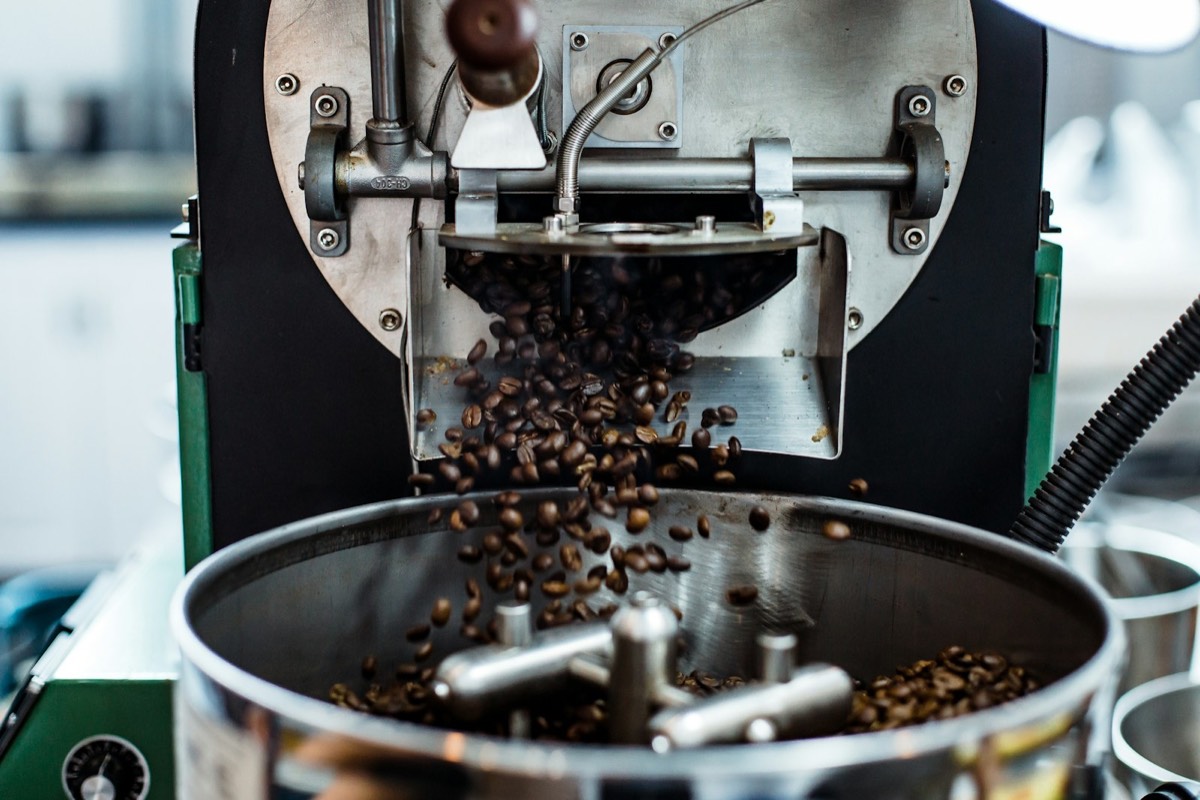
Roast names are shorthand for a time-and-temperature path. The measurable events along that path are the cracks and the weight change.
- Roast degree — where the roast stopped. Labels such as light, medium and dark describe that point in words; an instrument colour value replaces the word with a numbered reading taken from the same sample.
- First crack — the audible point at which bean temperature reaches roughly 196–205 °C and moisture escapes as steam.
- Second crack — the second audible event, near 224–230 °C, where the bean structure begins to fracture and surface oils appear.
- Roast loss — the drop in mass from green to roasted, commonly 13–20% across the range from light to dark.
Roasters also time the phase after first crack, because that is where most of the flavour-relevant chemistry sits. Development time is usually expressed as a ratio: 20–25% of the total roast spent after first crack.
The word on the bag is the weakest of these signals. Two roasters can print "medium" for roasts that differ by a visible margin in colour, which is why a colour reading, or a statement of where the roast stopped relative to the two cracks, travels better between bags than the adjective does.
Processing terms: washed, natural, honey
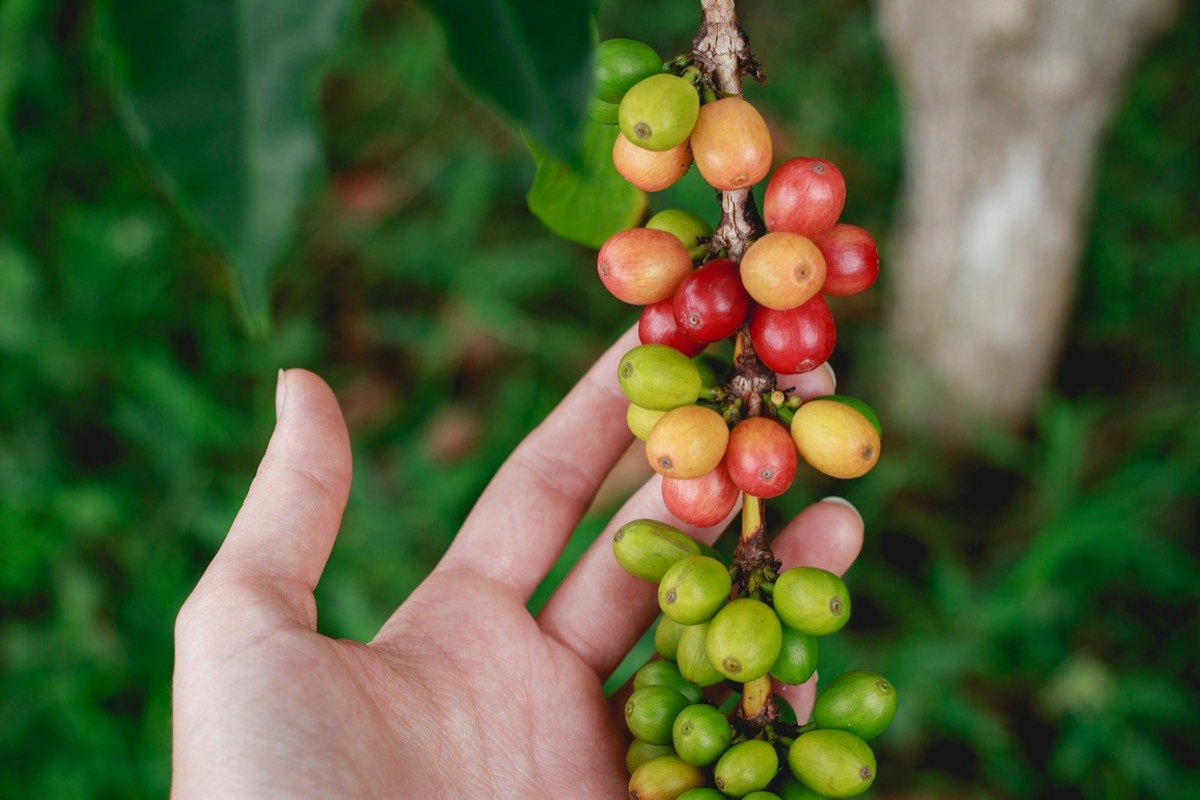
Processing decides how the fruit is separated from the seed, and all three routes end at the same green-bean target: a moisture content of about 10–12%, measured as the mass lost when a sample is dried at 105 °C.
- Washed — fruit is removed before drying; fermentation typically runs 12–36 hours, after which the seed dries on beds or patios for roughly 8–20 days.
- Natural — the seed dries inside the whole fruit, with cherries spread in thin layers and turned regularly until the target moisture is reached.
- Honey — part of the mucilage stays on the seed through drying, and the retained layer is what the colour names (yellow, red, black) describe.
These three words describe method. They do not carry a fixed flavour result, and they do not replace the origin, variety and roast information printed beside them on the same bag.
Method: The figures on this page come from published brewing standards and peer-reviewed measurements — the Specialty Coffee Association standards and the journal studies listed at the end — together with the arithmetic that converts one measurement into another.
Boundary: The terms on this page describe process measurements: mass, ratio, dissolved solids, particle size, roast temperature and green moisture. Settling a recipe for a particular bag happens at the scale and the grinder, where those figures are read off one cup at a time.
- Specialty Coffee Association — Coffee Standards (SCA-310 brewers, SCA-320 grinders, SCA-350 espresso machines)accessed 2026-09-11
- Validation of the Coffee Cuality™ Method for the Expert Assessment of Coffee Sensory Quality — Foods (MDPI) 15(4):678, doi:10.3390/foods15040678; documents the SCA/Q-grading cupping protocol and 100-point scoring scheme referred to above, full text via Europe PMC RESTaccessed 2026-09-12
- Does Coffee Have Terroir and How Should It Be Assessed? — Foods (MDPI), doi:10.3390/foods11131907accessed 2026-09-11
- The role of fines in espresso extraction dynamics — Scientific Reports, doi:10.1038/s41598-024-55831-xaccessed 2026-09-11
- Discrimination of Filter Coffee Extraction Methods of a Medium Roasted Specialty Coffee Based on Volatile Profiles and Sensorial Traits — Foods (MDPI), doi:10.3390/foods12173199accessed 2026-09-11
- Influence of Brewing Methods on the Bioactive and Mineral Composition of Coffee Beverages — Molecules (MDPI), doi:10.3390/molecules30204080accessed 2026-09-11
- Geographic provenance and environmental growing conditions as factors influencing phytochemical composition of Arabica green coffee beans — Plant Biology, doi:10.1111/plb.70136accessed 2026-09-11
Keep this list next to the equipment you actually use. A scale that reads to 0.1 g and a grinder whose setting you write down turn most of these twenty words into something you can verify in a minute, and the ones your kitchen cannot measure yet are the ones worth asking a roaster to explain.