Coffee reaches the Ottoman world as a drink with a devotional use, becomes a licensed urban trade within two generations, and is then closed by decree — repeatedly. That sequence separates the Ottoman case from the later European one, where the coffeehouse arrived as a commercial novelty and a literary joke. In Ottoman cities the kahvehane grew out of Yemeni practice, a Meccan legal dispute and Istanbul commerce, and each stage left dated traces: a legal case, a chronicle entry, a closure order, a surviving pot.
What follows keeps three kinds of evidence in view and keeps them distinct. The chronicle record supplies dates and names. The administrative record supplies closures and reopenings. Museum collections supply the vessels, and with them a measure of how ordinary the trade became. Where a widely repeated date rests on a single chronicle account, the sentence carrying it says so.
Yemen, the Sufis and the first prohibition
The reference literature places the earliest credible accounts of coffee drinking in the Sufi lodges of Yemen in the middle of the fifteenth century, where the drink was used to sustain long night devotions. Cultivation and the trade built on it were organised in Yemen and the southern Arabian highlands, and the drink travelled north along the routes that already linked Mecca, Cairo and the Syrian cities.
The first documented prohibition comes from Mecca, dated to 1511–1512. The city's governor, acting with a group of jurists, had coffee banned on the argument that it was an innovation and that it was being drunk in mixed gatherings; the ruling followed the drink rather than ending it, and it did not hold. A comparable dispute appears in Cairo within a few years, where legal opinion divided between those who treated roasted coffee as a lawful stimulant and those who grouped it with intoxicants. The shape of the argument is the point: coffee was contested as a social practice — who gathered, when, and on whose authority — at least as much as it was contested as a substance.
Tahtakale, 1554: the coffeehouse becomes a building
Two generations later the drink had an address. Ottoman chronicle tradition, in the account usually traced to the historian İbrahim Peçevi, dates the first coffeehouse in Istanbul to 1554–1555, opened in the Tahtakale quarter by two men who had come to the capital from Aleppo and Damascus. The route matters: the institution arrives through the Syrian cities rather than straight from Yemen, and it arrives as a commercial venture run by named tradesmen in a specific street, not as a court fashion.
Tahtakale sat inside the commercial core, close to the covered market and the port traffic — where a business needing roasted beans, fuel, water and cups would want to be. The coffeehouse offered something that the mosque courtyard, the bathhouse and the tavern each offered only in part: a licensed room where men could sit for hours over a cheap heated drink. Other Ottoman cities followed, and by the second half of the sixteenth century the premises were common enough around the market quarters, the barracks and the colleges of the medreses to be treated as a category of public order in its own right.
Closures: 1633 and the 1660s
Once coffeehouses were buildings full of men, shutting them became an instrument of government. Orders to close coffeehouses in Istanbul, Mecca, Cairo and Damascus recur through the late sixteenth century, justified variously by fire risk, by the mixing of ranks, or by the claim that the rooms sheltered sedition and gambling. Closure rarely lasted; the premises were taxable and profitable, and orders were reversed or quietly ignored.
Two dated episodes anchor the pattern:
- 1633. Under Sultan Murad IV coffeehouses were closed again, and enforcement carried the severity associated with that reign; the prohibition was bundled with restrictions on tobacco and wine rather than argued from coffee alone.
- The 1660s. The grand vizierate of the Köprülü family ordered further closures as part of a wider programme of public order, again targeting the gathering places of the capital.
Read together, this is not evidence that coffee was illegal across the empire. It is evidence that the kahvehane was a recognised political space whose clientele had to be managed — by turns taxed, licensed, watched and shut.
What was inside a kahvehane
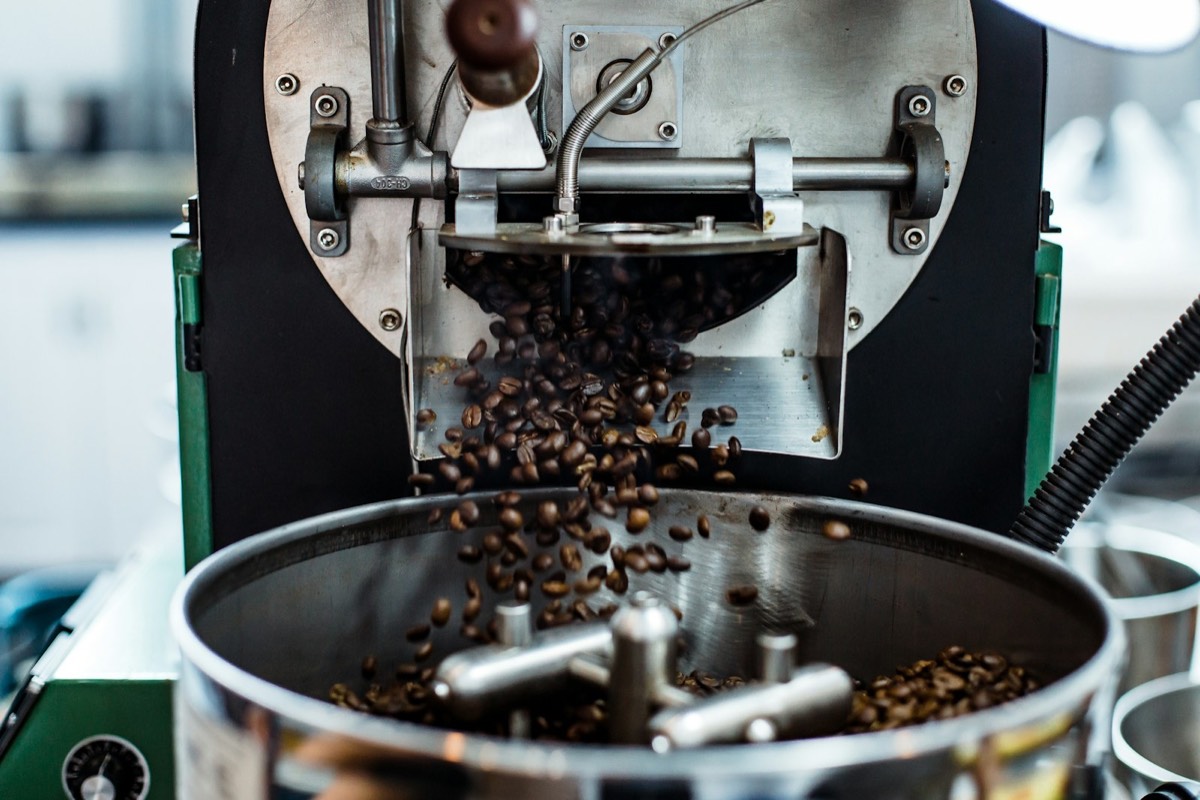
Coffee was brewed in a long-handled pot — cezve, also called ibrik — over a small fire or a tray of hot sand, and served in small handleless cups, often with water and a sweet alongside. The room was furnished for sitting: benches or divans along the walls, a stove at the centre, and a man whose job was to roast and grind. Because wine was religiously proscribed for Muslims, the coffeehouse occupied a leisure niche that in European cities was shared with the tavern and the inn, and that is the sharpest contrast with the institutions that later took the name.
A century separates the Tahtakale room from the first London coffeehouse of 1652, and the connection between the two runs through the same Levantine trade rather than through imitation of the drink alone. The kahvehane was also a workplace: it paid a licence, kept order for its neighbourhood, and employed the boy who carried the cups as well as the man who kept the fire going.
The objects: cezve, cups and Kütahya ware
The material record of the trade sits in museum catalogues rather than in the chronicles, and two records make the point. The Victoria and Albert Museum catalogues a coffee pot made at Kütahya, the Anatolian pottery town whose workshops became one of the empire's main ceramics centres; the record ties a description to one specific vessel — handle, lid and body — instead of a general impression of "Ottoman coffee culture". The same museum holds Thomas Allom's watercolour of a Turkish coffee house in Constantinople, painted in 1838 and reproduced for the Reverend Robert Walsh's book of the same year, which describes the caffinet as the Turk's "favourite place of indulgence" (p. 59) and notes the carved and painted interiors with small fountains to cool the summer air.
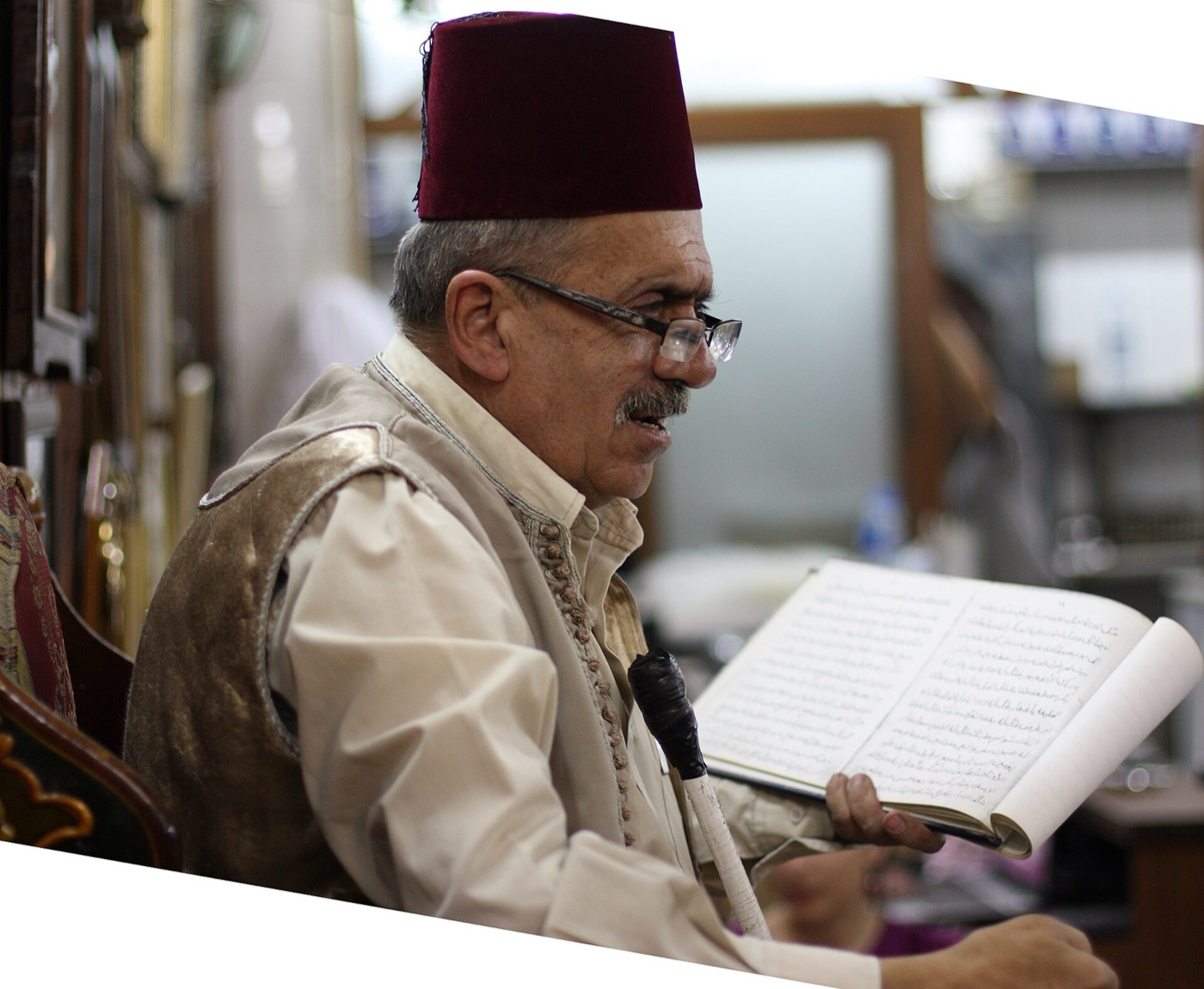
Read together, the pot and the picture cover the two ends of one practice. The vessel is ordinary, functional and repeated across a whole production centre; the interior is a decorated room where customers drank coffee, listened to music, were shaved, smoked pipes and heard storytellers. Long-handled brewers, lidded pots with metal mounts and handleless cups are the physical signature of a method that made coffee to order, in small volumes, in front of the customer — which is also why the room needed a payroll: the man who kept the fire going, and the boy who carried the cups.
Method: The page builds on three dated layers. The chronicle and legal record behind the Meccan prohibition of 1511–1512, the Tahtakale coffeehouse of 1554–1555, and the closures of 1633 and the 1660s is reported through the reference literature and through Eminegül Karababa and Güliz Ger's study of early modern Ottoman coffeehouse culture in the Journal of Consumer Research, which traces the 1550s address to the chronicle account of İbrahim Peçevi. The physical layer is cited at record level from the Victoria and Albert Museum's catalogue entries for a Kütahya coffee pot and for Thomas Allom's watercolour of an Istanbul coffee house, painted in 1838. The Ottoman institutional setting — the state, the capital and the provincial cities in which these rooms were licensed and closed — is taken from the reference works listed below.
Boundary: Coverage runs from the mid-fifteenth-century Yemeni use of the drink to the Ottoman closures of the seventeenth century, with material evidence drawn from two catalogued objects that preserve the same brewing method. Iran, North Africa and the later Ottoman centuries are outside this page, and European coffeehouse dates appear only as contrast points.
- Victoria and Albert Museum — Coffee pot, Kütahya ware (collections record O85345)accessed 2026-09-11
- Victoria and Albert Museum — Interior of a Turkish Caffinet, Constantinople, Thomas Allom, watercolour, 1838 (collections record O136488)accessed 2026-09-11
- Karababa, E. & Ger, G. — Early Modern Ottoman Coffeehouse Culture and the Formation of the Consumer Subject, Journal of Consumer Research (2005). doiaccessed 2026-09-11
- JSTOR Daily — Bringing Turkish Style to Europe (on Ottoman-derived social spaces reaching Europe)accessed 2026-09-11
- Encyclopaedia Britannica — Coffeeaccessed 2026-09-11
- Encyclopaedia Britannica — Ottoman Empireaccessed 2026-09-11
Read the Ottoman coffeehouse as an institution with a licence, a payroll and a closure order, not as a backdrop for the origin of café culture. Coffee came in through Yemen and the Syrian trade cities, became a room in Tahtakale in the 1550s, and was regulated by sultans and viziers precisely because it put men in the same place at the same time. The pots and cups in museum collections are the part of that story that can still be handled, and they are ordinary objects — which is exactly what makes them evidence.