Two people, same weight, same BMI — and very different risk
Weight and BMI both answer a version of the same question: how much? They are silent on a question that turns out to matter just as much for health: where? Waist-to-hip ratio (WHR) is one of the oldest and simplest ways to answer the second question, and it is worth understanding because it reveals something the bathroom scale never will.
Fat is not one thing
Body fat behaves differently depending on where it sits. Fat stored under the skin on the hips and thighs — sometimes called "pear-shaped" — behaves relatively benignly. Fat packed around the organs in the abdomen — "apple-shaped," or visceral fat — is more metabolically active and more strongly linked to cardiovascular and metabolic risk. This is not a subtle distinction; it is one of the more consistent findings in the study of body composition.
How WHR captures the difference
The ratio is exactly what it sounds like: waist circumference divided by hip circumference. A number above the World Health Organization's thresholds — 0.90 for men, 0.85 for women — suggests fat is concentrating around the middle. Because it is a ratio of two measurements on the same person, it naturally adjusts for overall size, which is part of its usefulness: a very tall and a very short person can be compared on the same scale.
WHR and BMI work best together
BMI gives you the amount; WHR gives you the shape. A person can have a "normal" BMI and still carry enough abdominal fat to show an elevated WHR — a combination BMI alone would miss entirely. Conversely, someone with a higher BMI but low WHR may be carrying fat in a less concerning pattern. Using both paints a fuller picture than either alone, which is why they sit side by side on this site rather than replacing each other.
The measurement matters
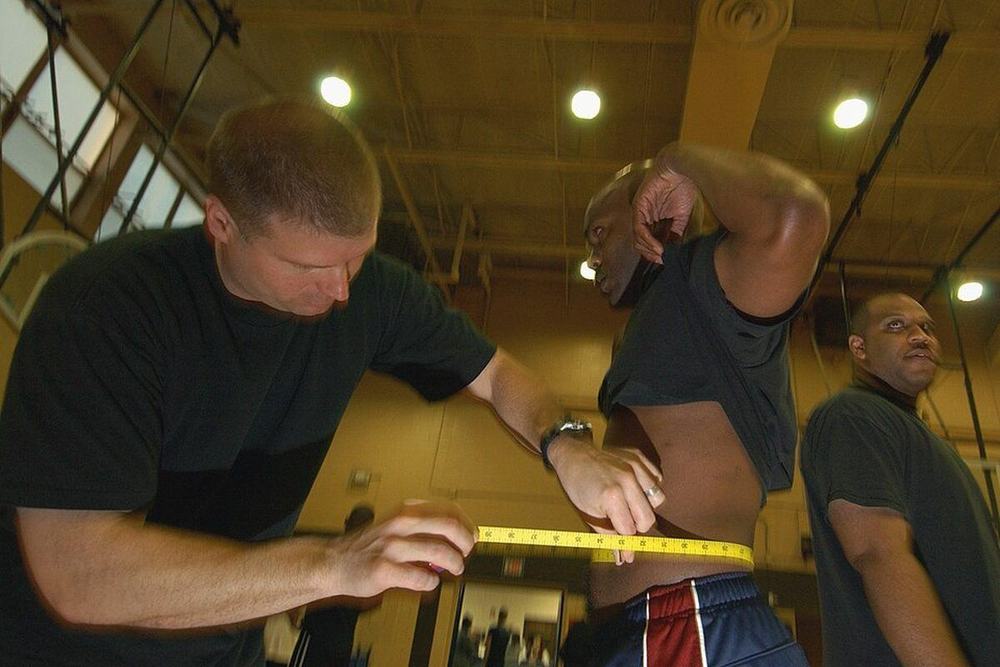
Waist should be measured at the navel, relaxed, not sucked in; hips at the widest point. Small differences in tape placement shift the ratio, so for tracking over time, consistency is again what counts. A single WHR reading is a snapshot; a series of readings taken the same way over months is a trend.
WHR is a general screening measure of fat distribution. It is not a diagnosis, and individual risk depends on many factors — discuss yours with a healthcare professional.